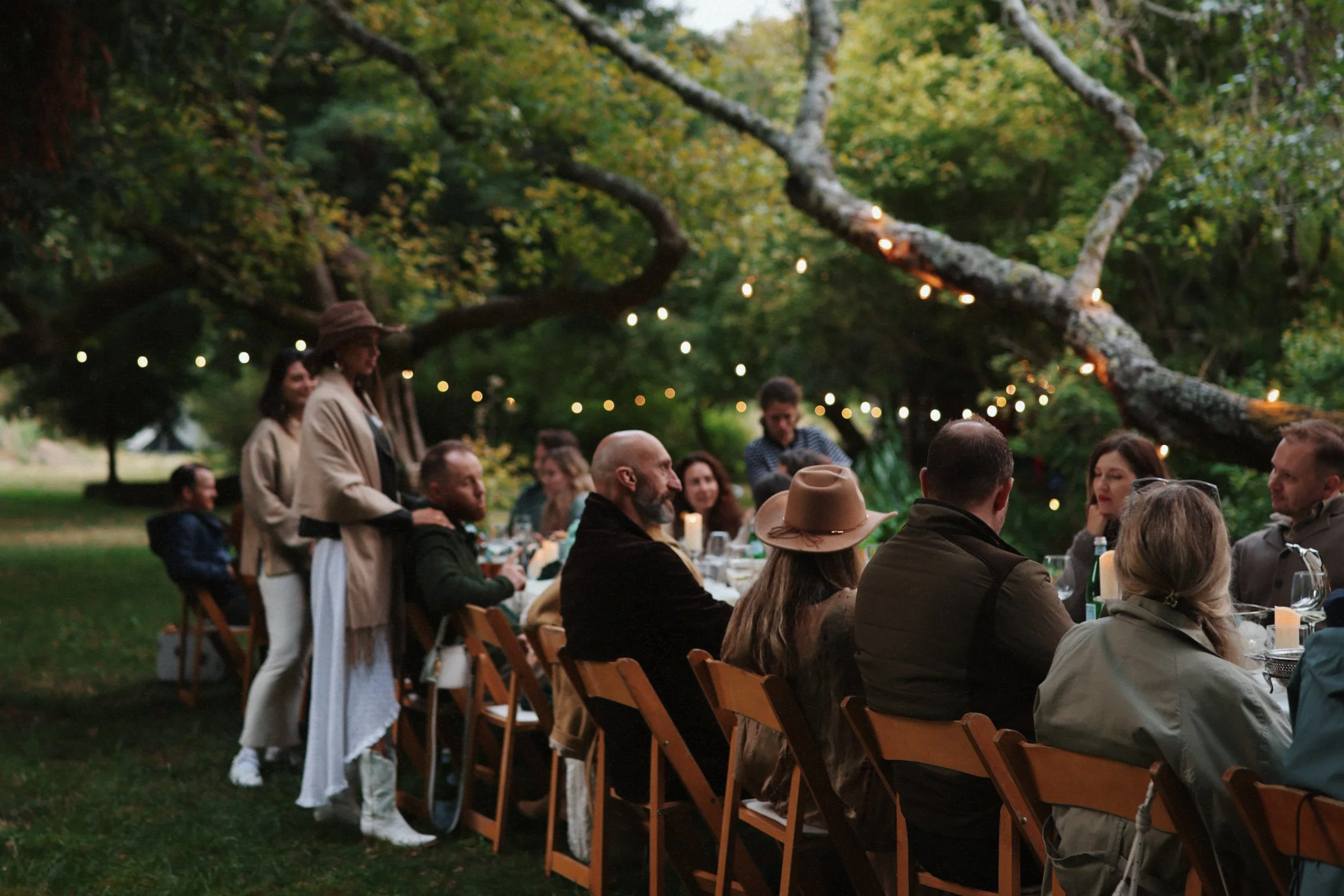
Enchanted Forest Dinner
Venture Retreat Center, Pescadero, California
July 2026
Creative Direction, Experience Design & Workshop Facilitation
A private birthday celebration for thirty guests in a redwood forest, designed and produced in four weeks, built around a facilitated art workshop and a family-style dinner among the trees.
The Brief and Challenge
Create a private celebration for thirty guests that feels intimate, unique, imaginative, and genuinely participatory.
The central question was not how to decorate this event. It was:
How can this become a shared experience that feels meaningful, natural, easy to enter and magical at the same time?
The evening needed to feel enchanted without becoming themed, intentional without feeling staged, and participatory without making anyone feel obligated to perform. It also needed enough warmth to move naturally from meditation and art-making into dinner, conversation, and dancing.
The constraints were concrete: an outdoor setting, a controlled budget, a four-week timeline, and one lead across concept, design, facilitation, coordination, and documentation. The guests did not all know each other, and none of them could be assumed to want to make art in front of strangers.
Concept: The Art of Noticing
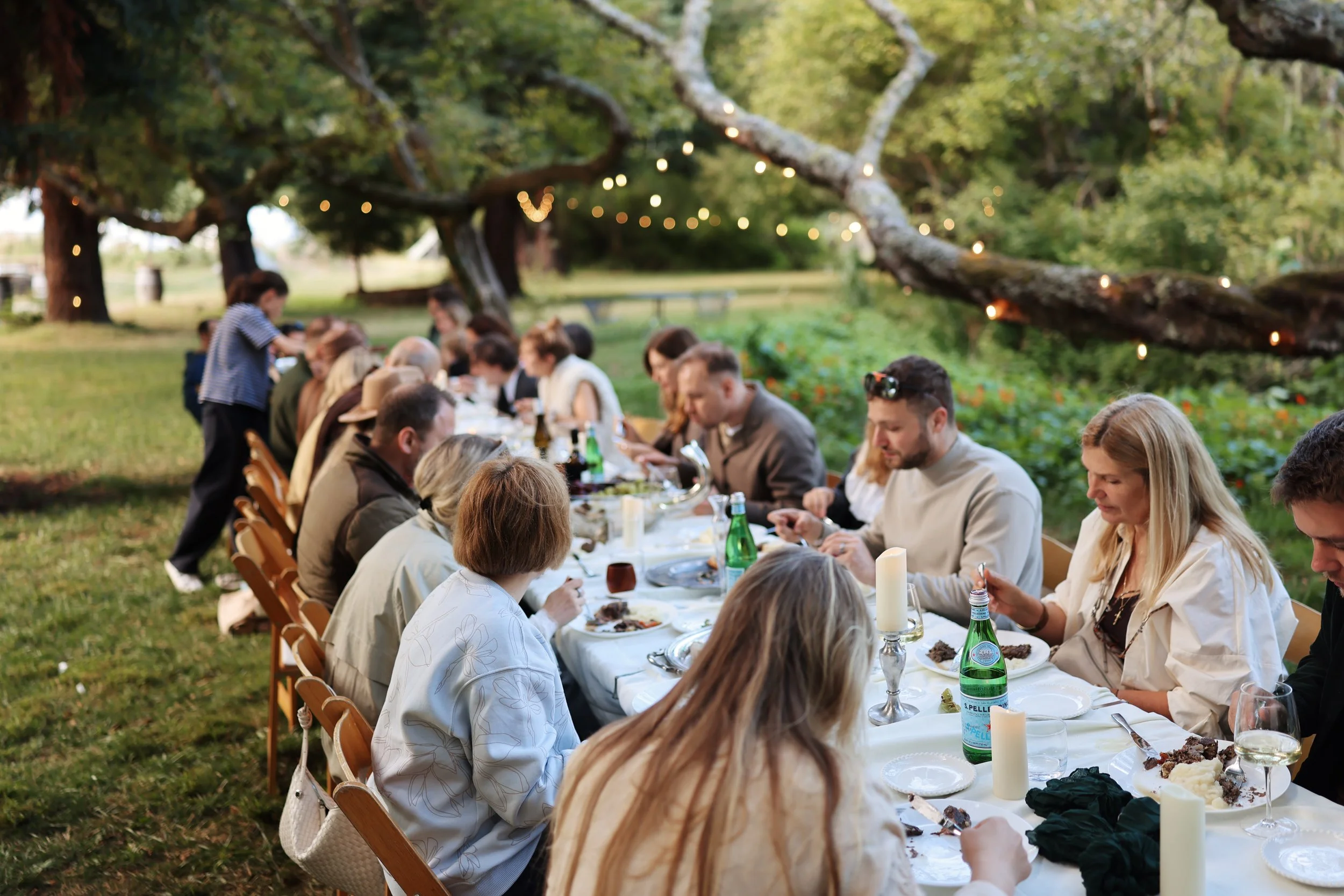
The concept was a contemporary enchanted-forest dinner, expressed through material, light, and spatial composition rather than literal props: a long communal table among the trees, layered natural textures, warm lighting, shared food.
But the visual world was the container, not the idea. The idea was attention.
I built the evening around three movements:
Presence — slowing down and arriving in the moment
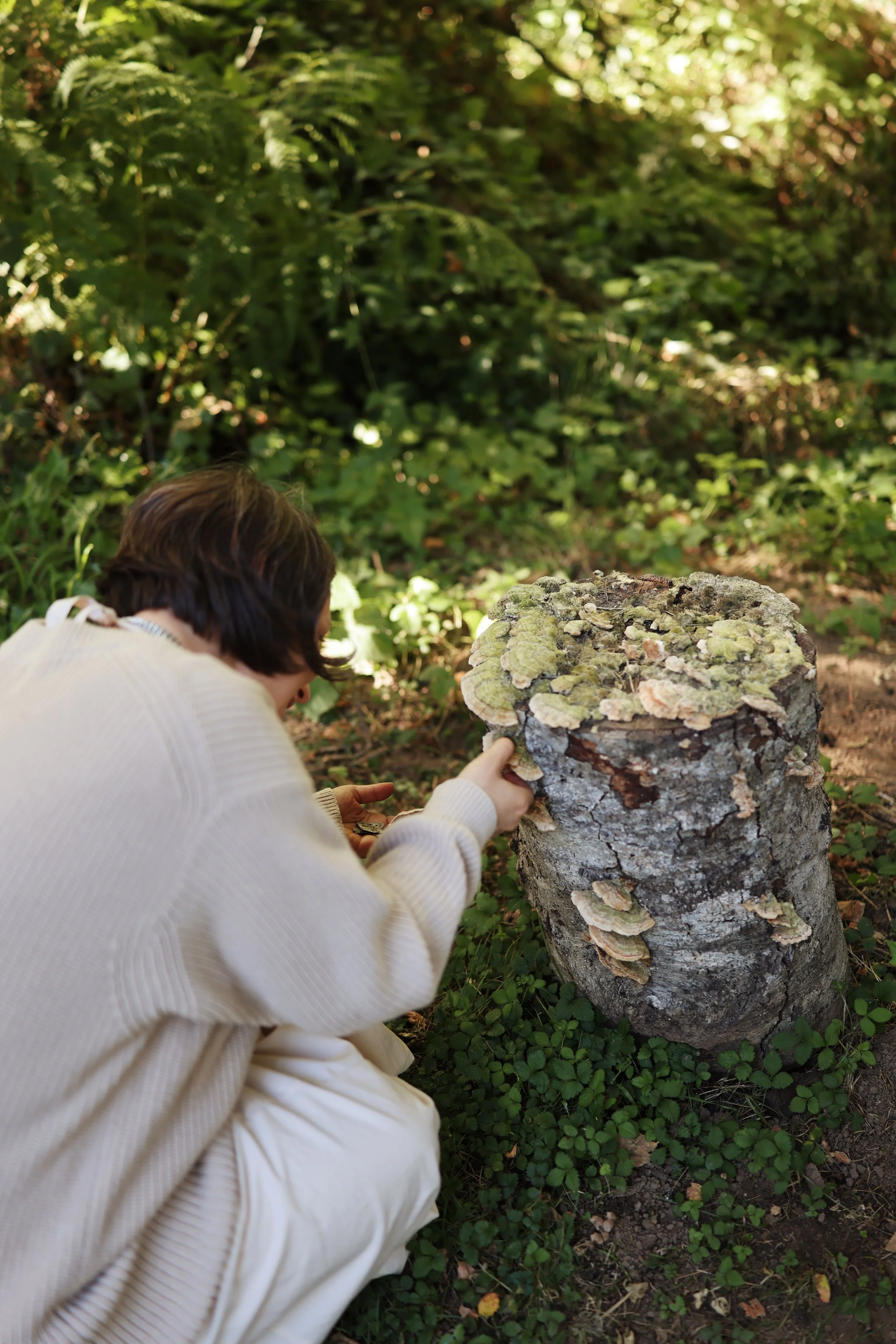
Noticing — attending to internal experience and immediate surroundings
Connection — making and eating collectively
I interpreted "enchanted forest" as the feeling of reading a fairy tale rather than the imagery of one: slightly surreal, elevated, curious. The atmosphere had to come from scale, texture, light, and the relationship between people and the landscape — not from conventional décor.
Experience Architecture
The evening followed a deliberate emotional progression. Each phase was designed to make the next one possible.
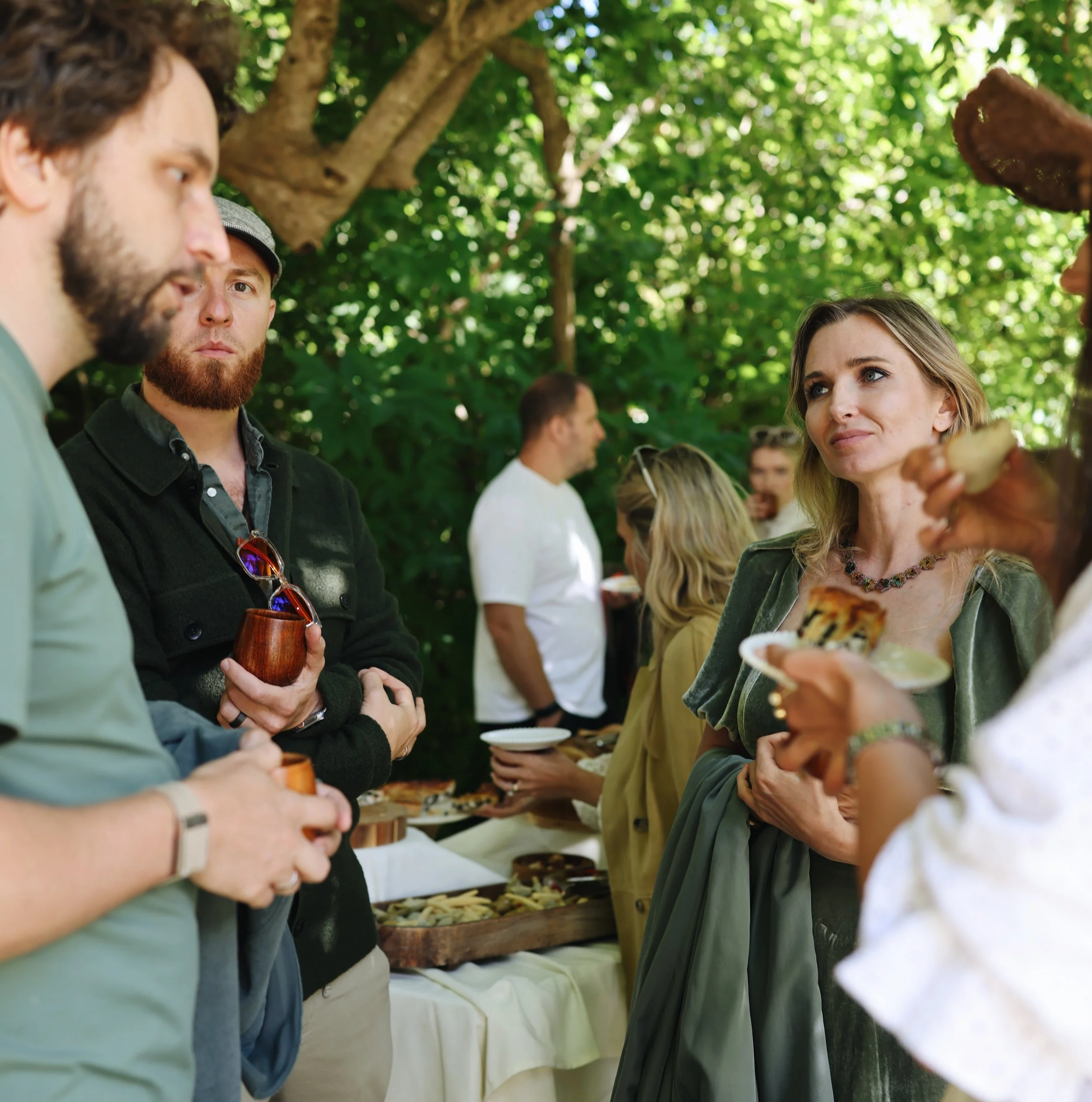
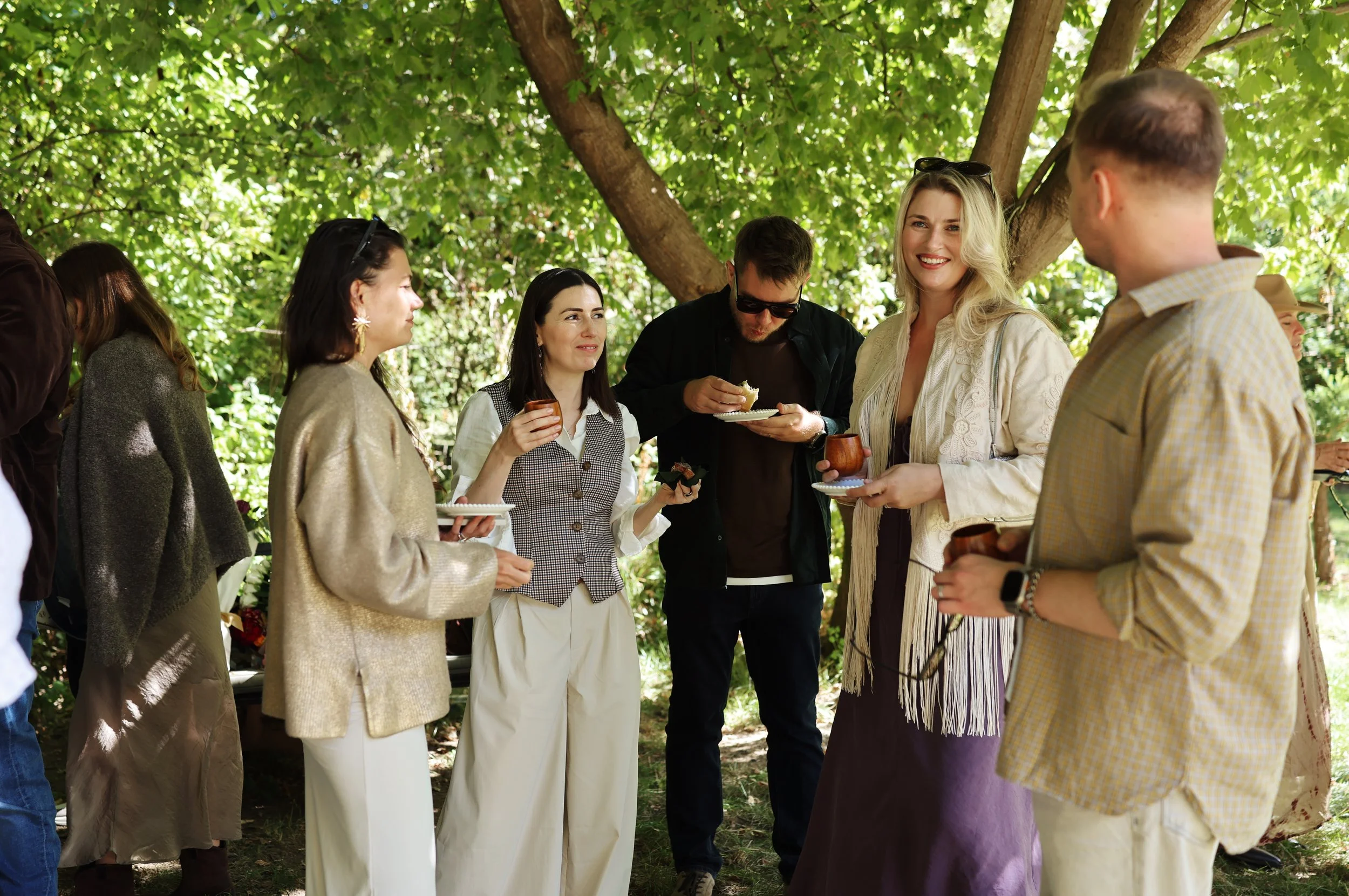
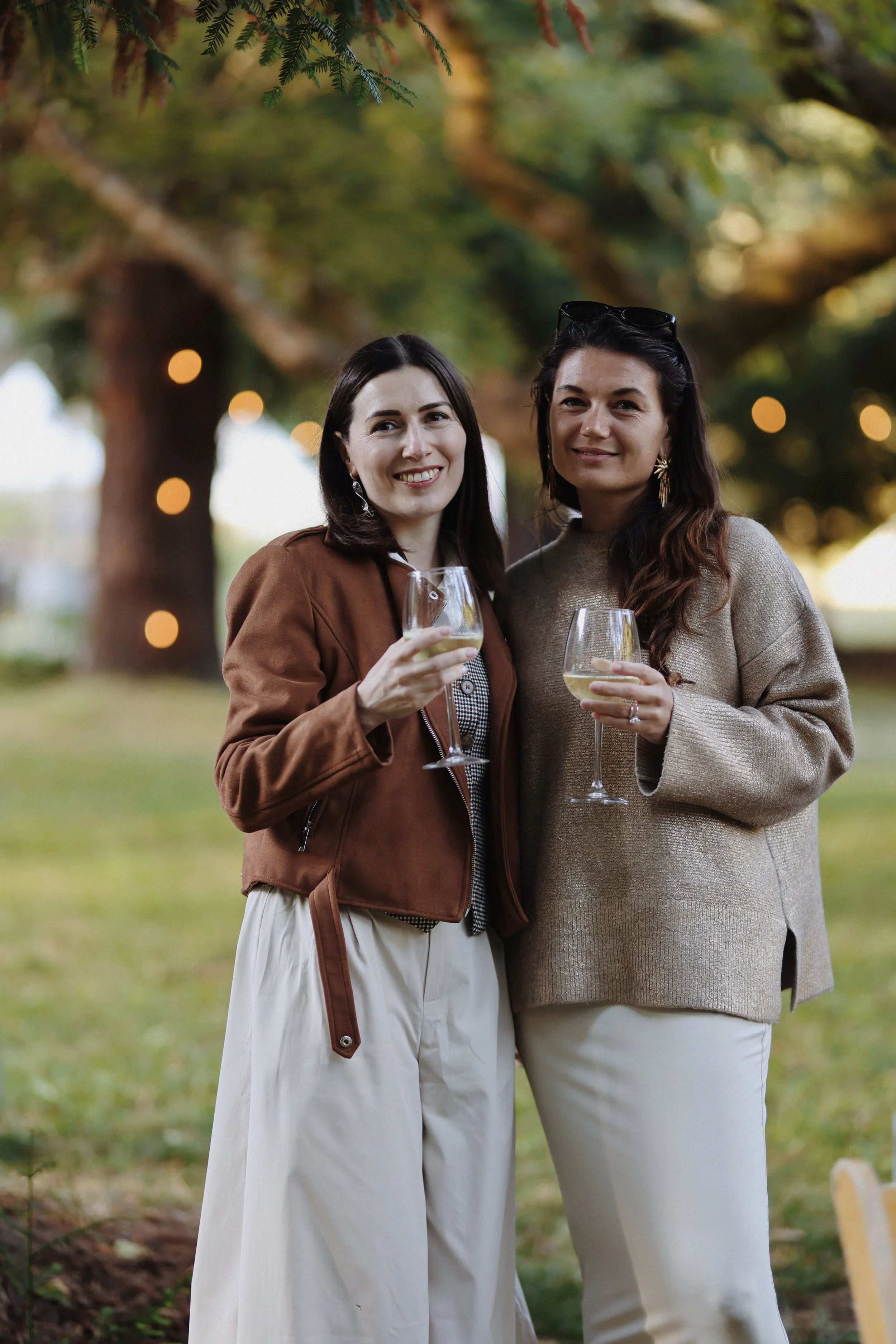
Arrival — Guests entered the forest setting with drinks and appetizers, transitioning out of the day.
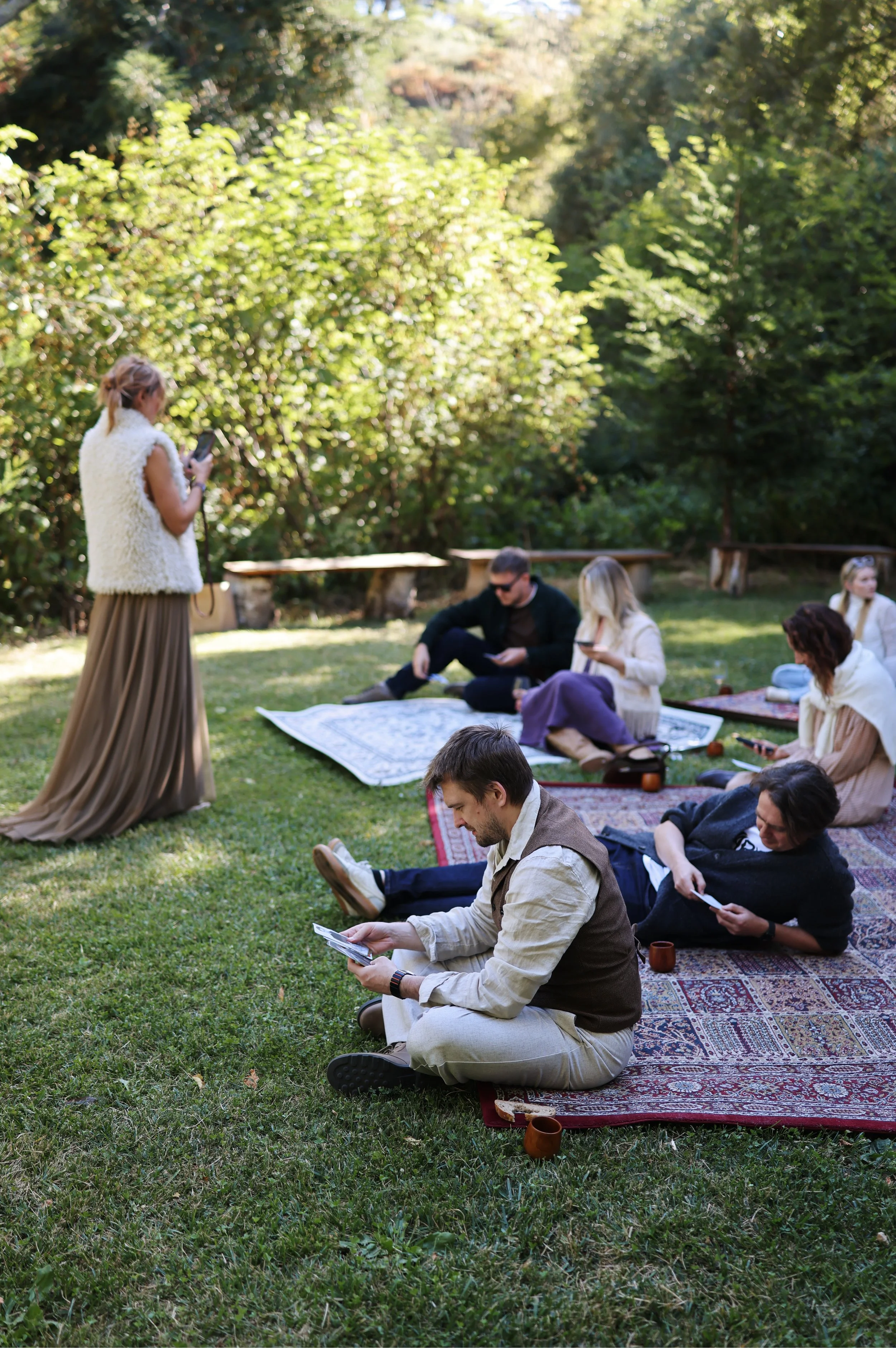
Grounding — A short introduction to the ideas behind the evening, followed by a facilitated meditation focused on the body, breath, sound, and surroundings.
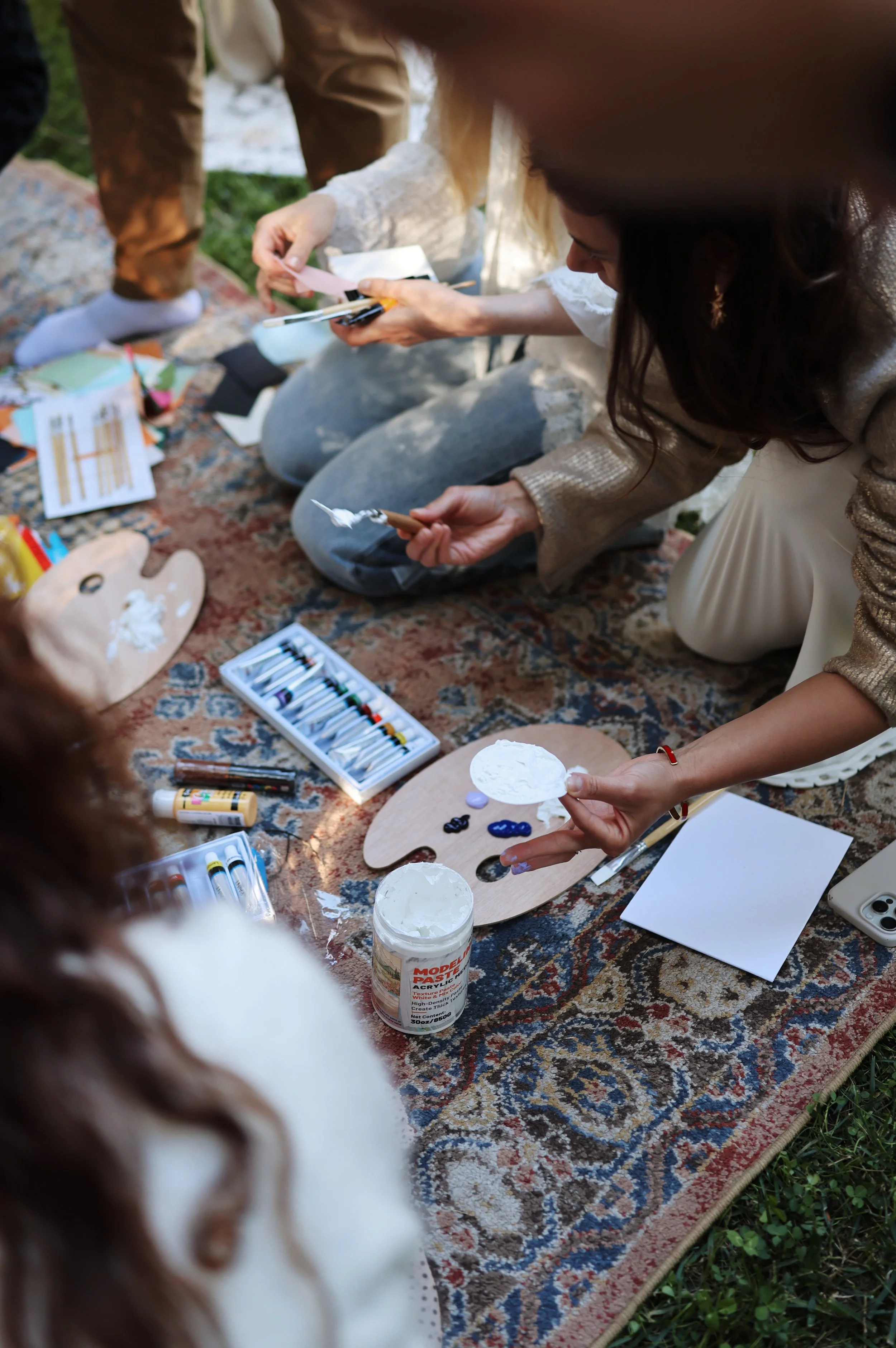
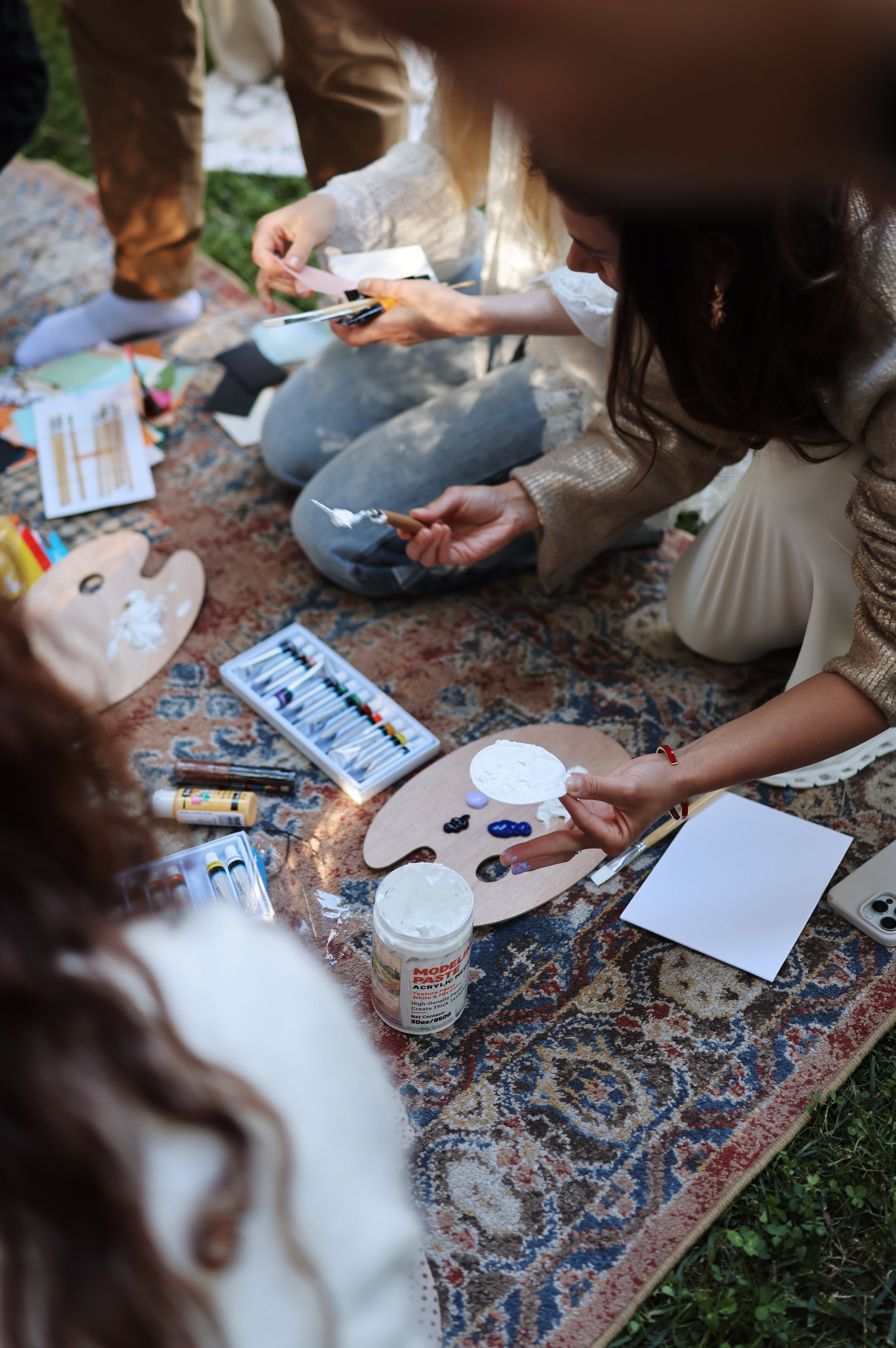
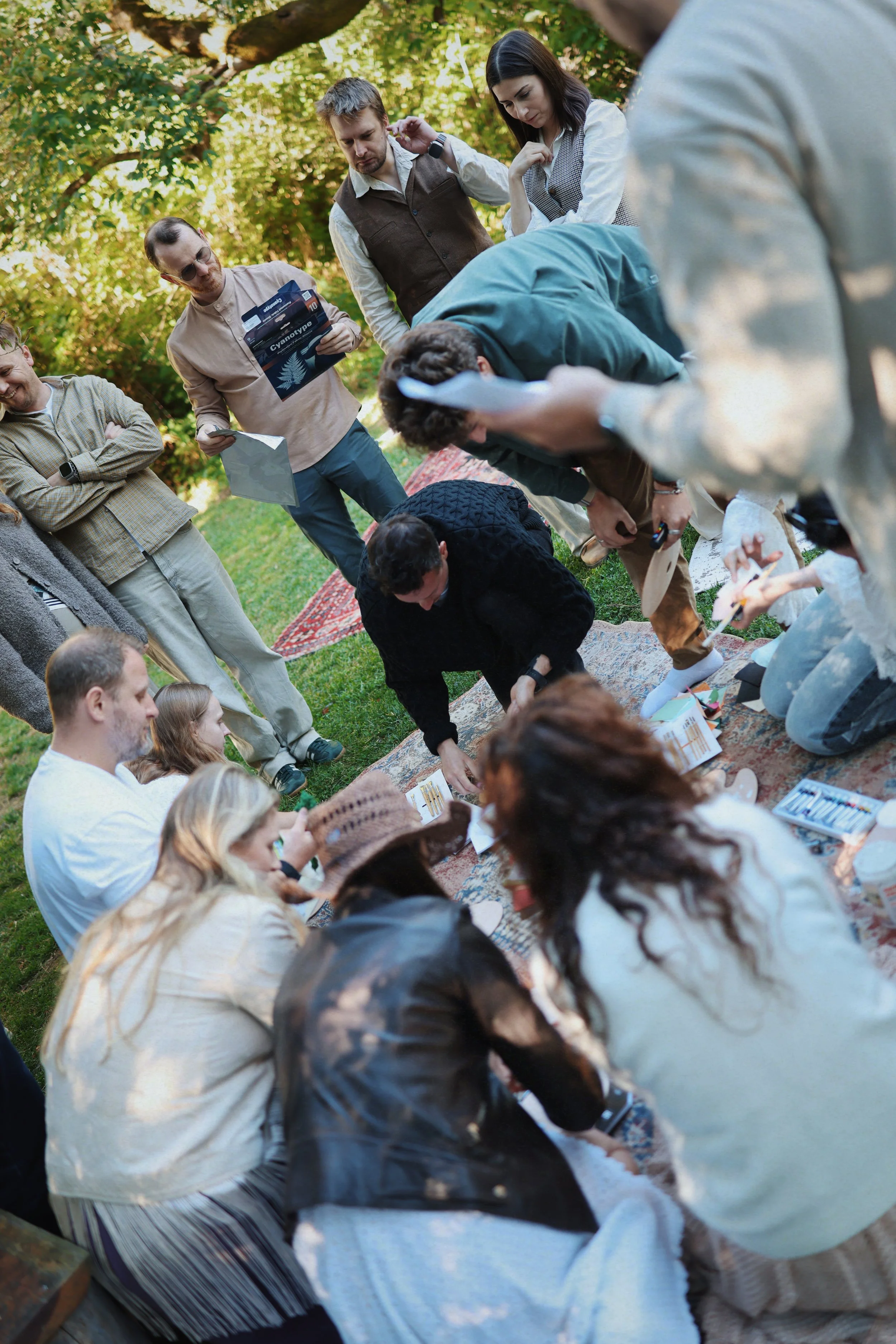
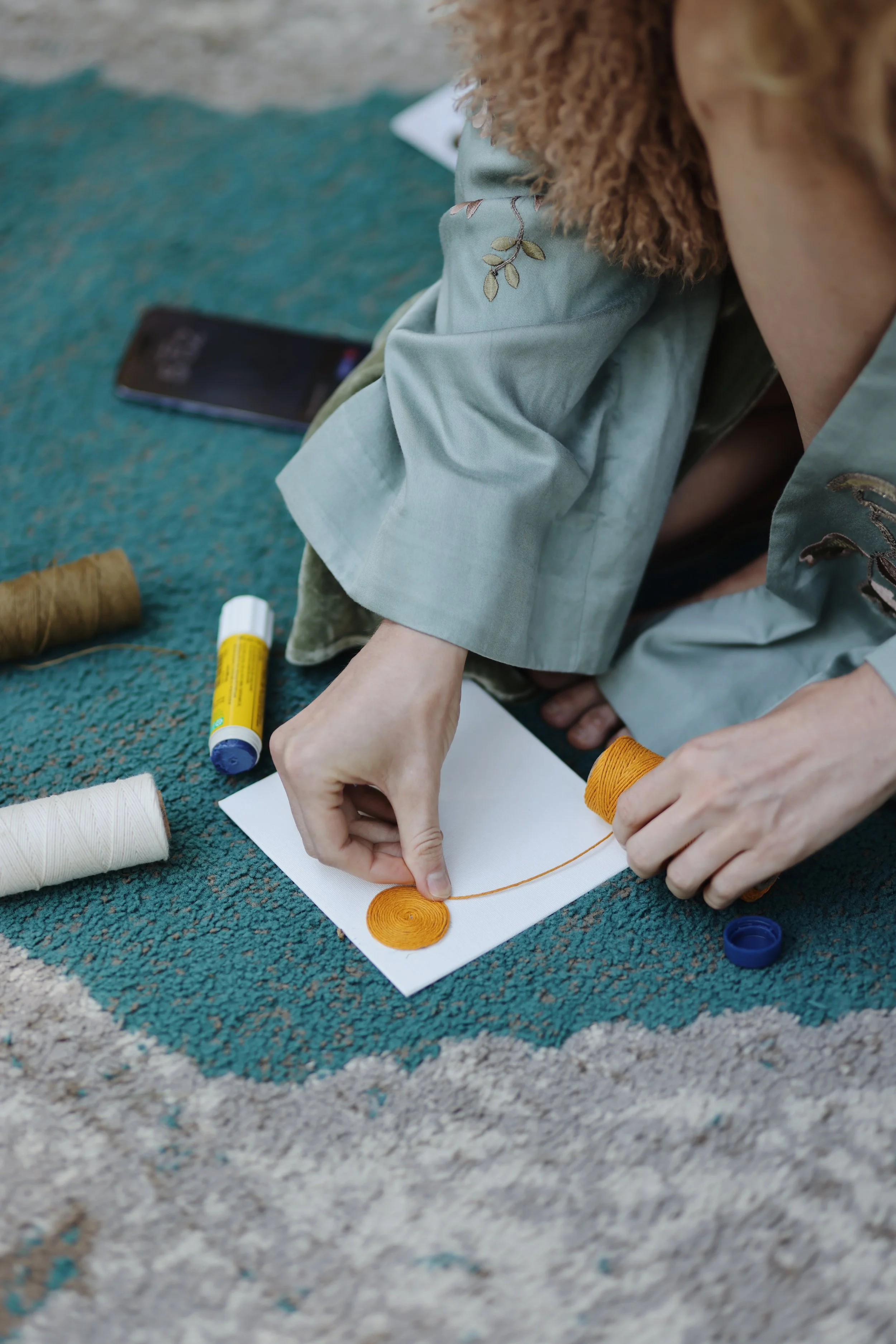
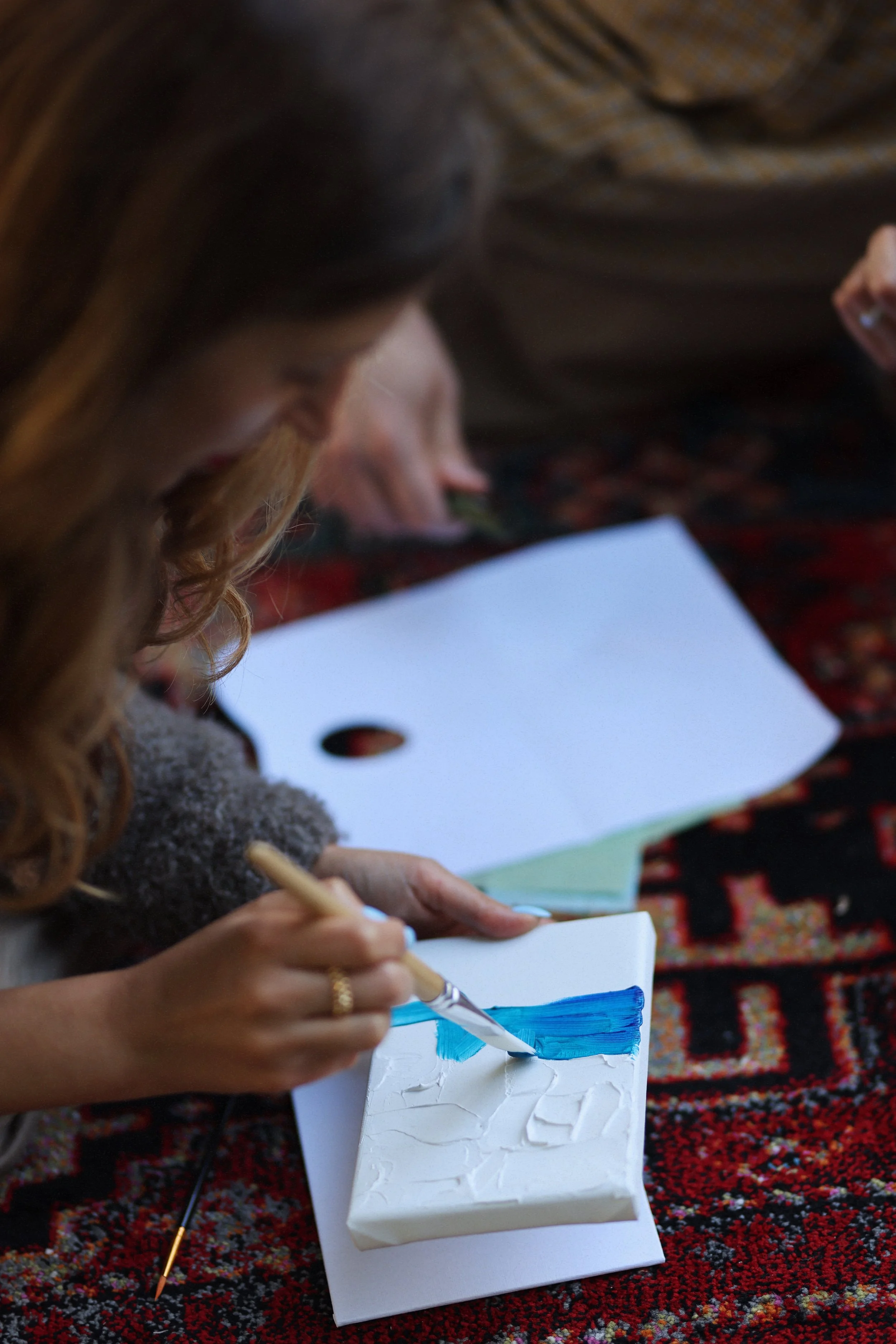
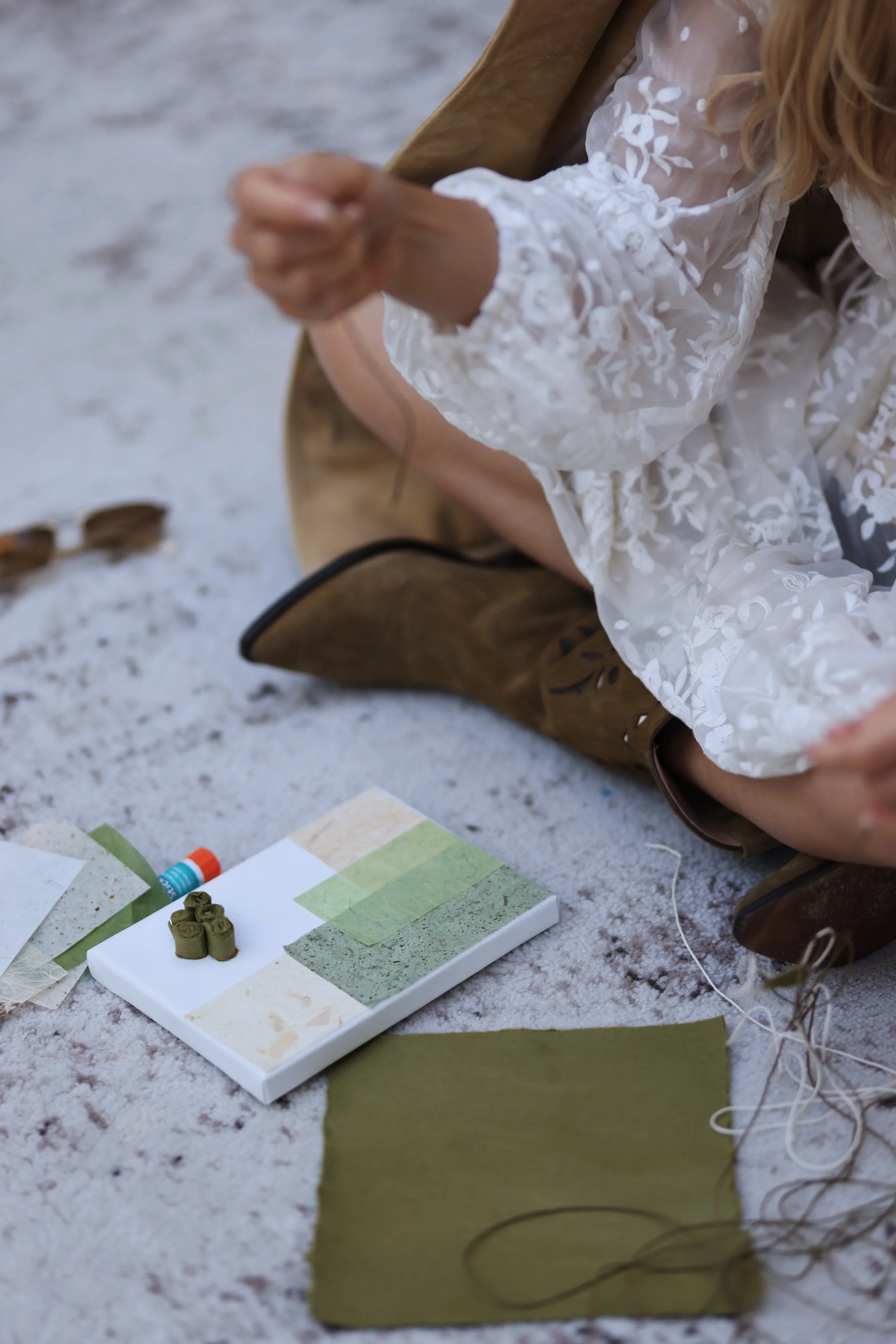
The Creative Act — Each guest made an individual mixed-media work in response to what they noticed.
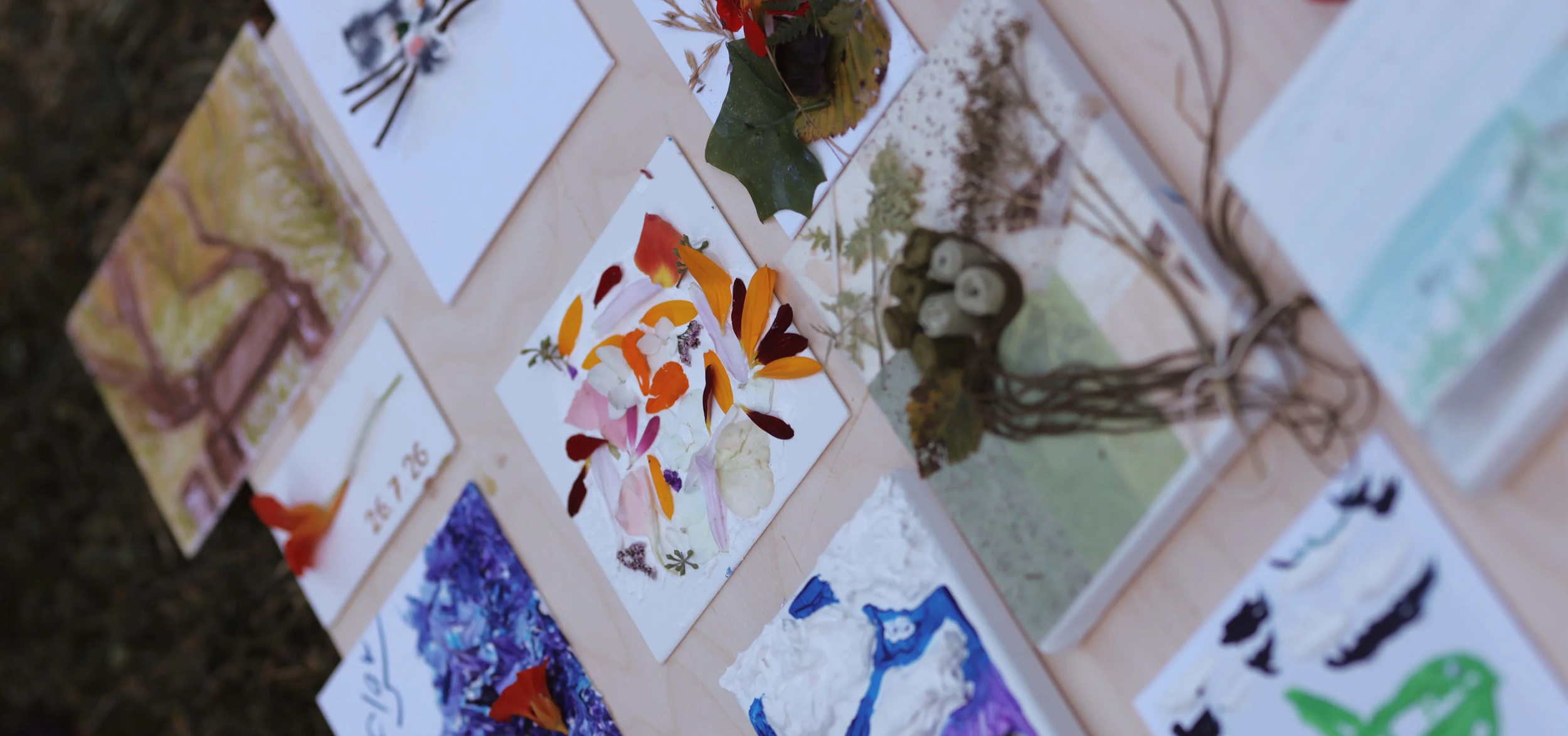
Assembly — The individual works were composed into one collective artwork.
Dinner — The group moved from individual reflection to a family-style meal at one long table.
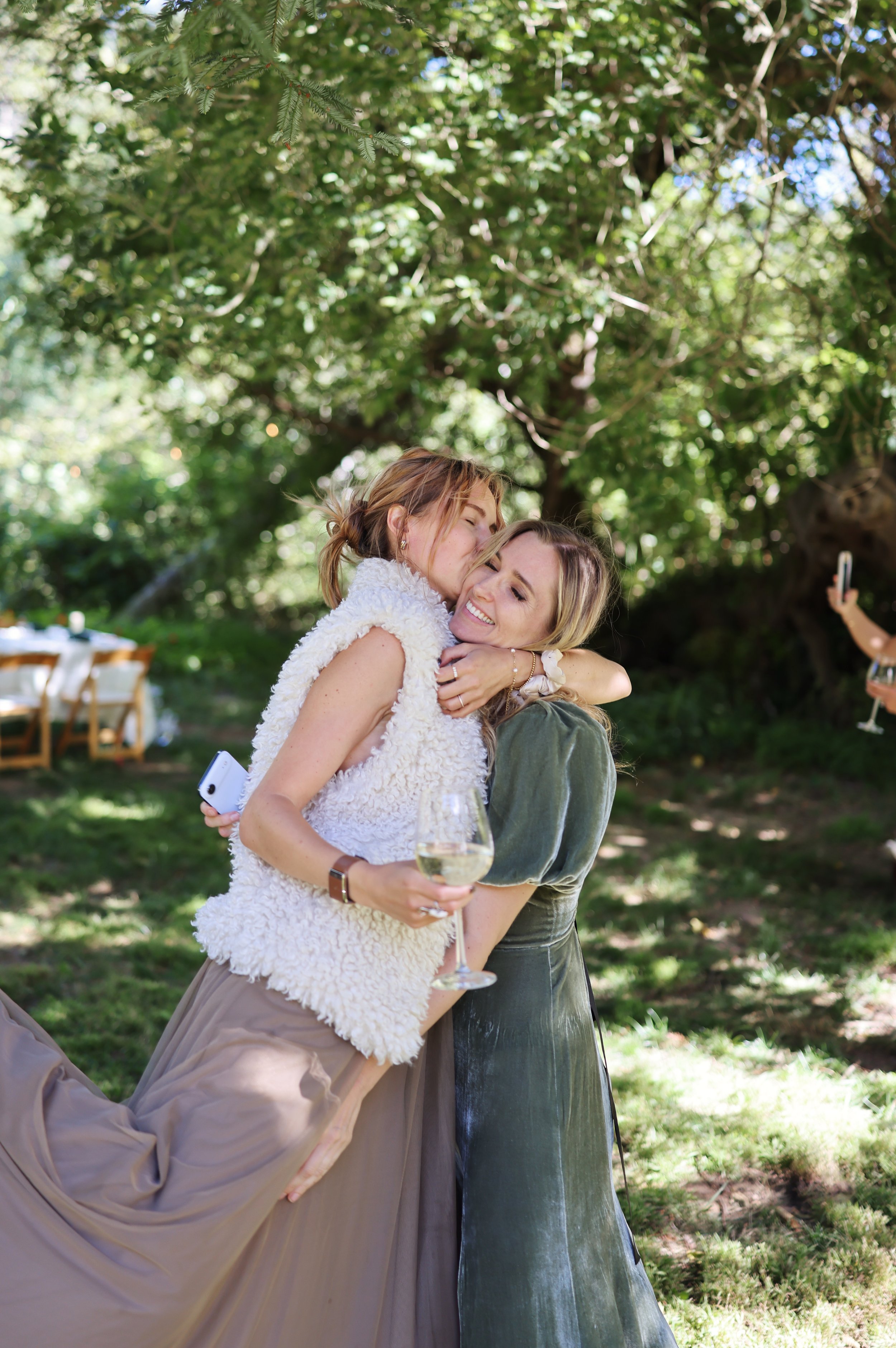
Celebration — The evening ended in conversation, laughter, and dancing.
The sequencing was the central design decision. I placed meditation before making to lower the threshold for participation and pull attention away from skill. I placed making before dinner so that guests would arrive at the table having already done something together — a shared point of reference that changed the quality of the conversation before it started.
The Creative Act
The workshop drew on Rick Rubin's The Creative Act, Marina Abramović's practice exercises, and The Art of Noticing, an original teaching framework I developed.
Its premise is simple: creativity is not a talent reserved for trained artists. It begins with attention — noticing what is happening around us, what is happening within us, and what we respond to.
I structured the workshop to remove the two barriers that stop non-artists from making anything: not knowing where to begin, and fearing the result will be judged.
A short reframing of creativity as attention rather than skill
Abramović exercise cards, using simple routines made strange to redirect attention
Guided breathing and a somatic body scan
A single prompt: What am I noticing most right now?
Approximately sixty minutes of individual mixed-media work
Explicit permission not to make anything representational or conventionally beautiful
An invitation to treat the process as a game
No obligation to explain the finished work
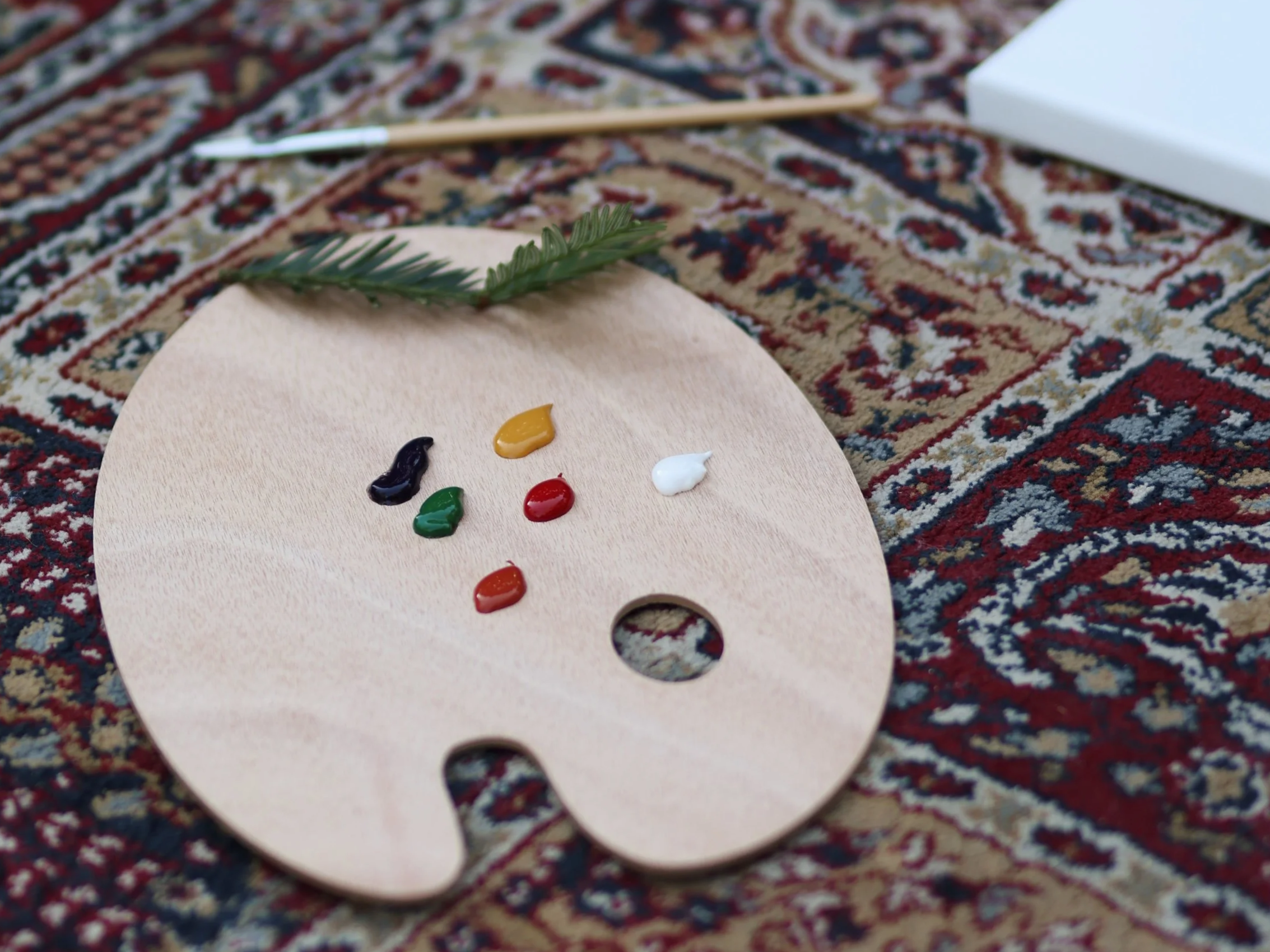
The materials were deliberately tactile and forgiving: paint, fabric, paper, thread, wood, and elements found on the property. Each guest worked on an individual canvas or panel.
The pieces were then arranged on a 30 × 40-inch birch base as a single composition. The finished work holds thirty subjective experiences of the same afternoon. Placed together, the individual perspectives remain distinct but begin to affect one another.
It exists now as one object — the only record of that specific afternoon, made by the people who were in it.
Visual and Culinary Direction
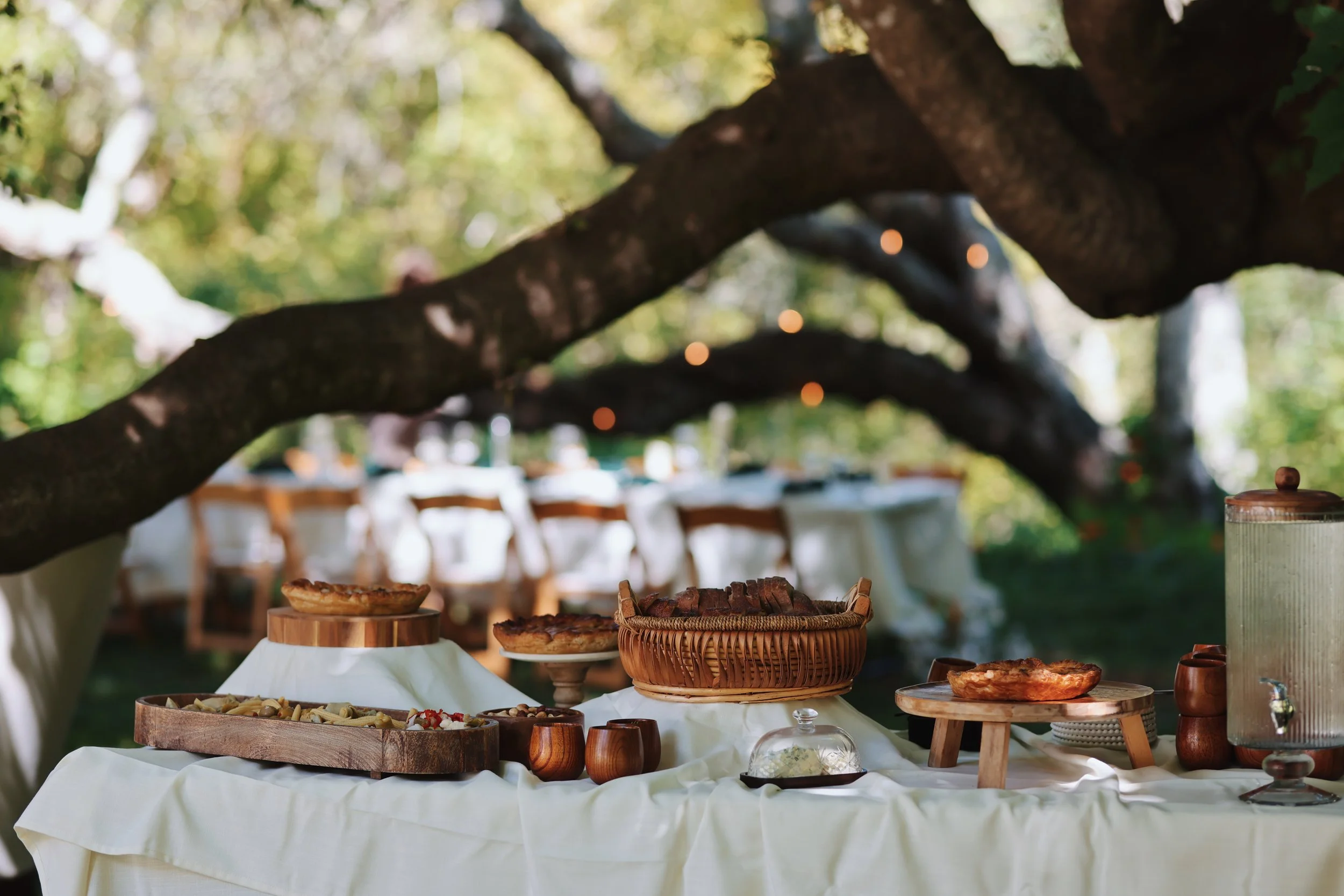
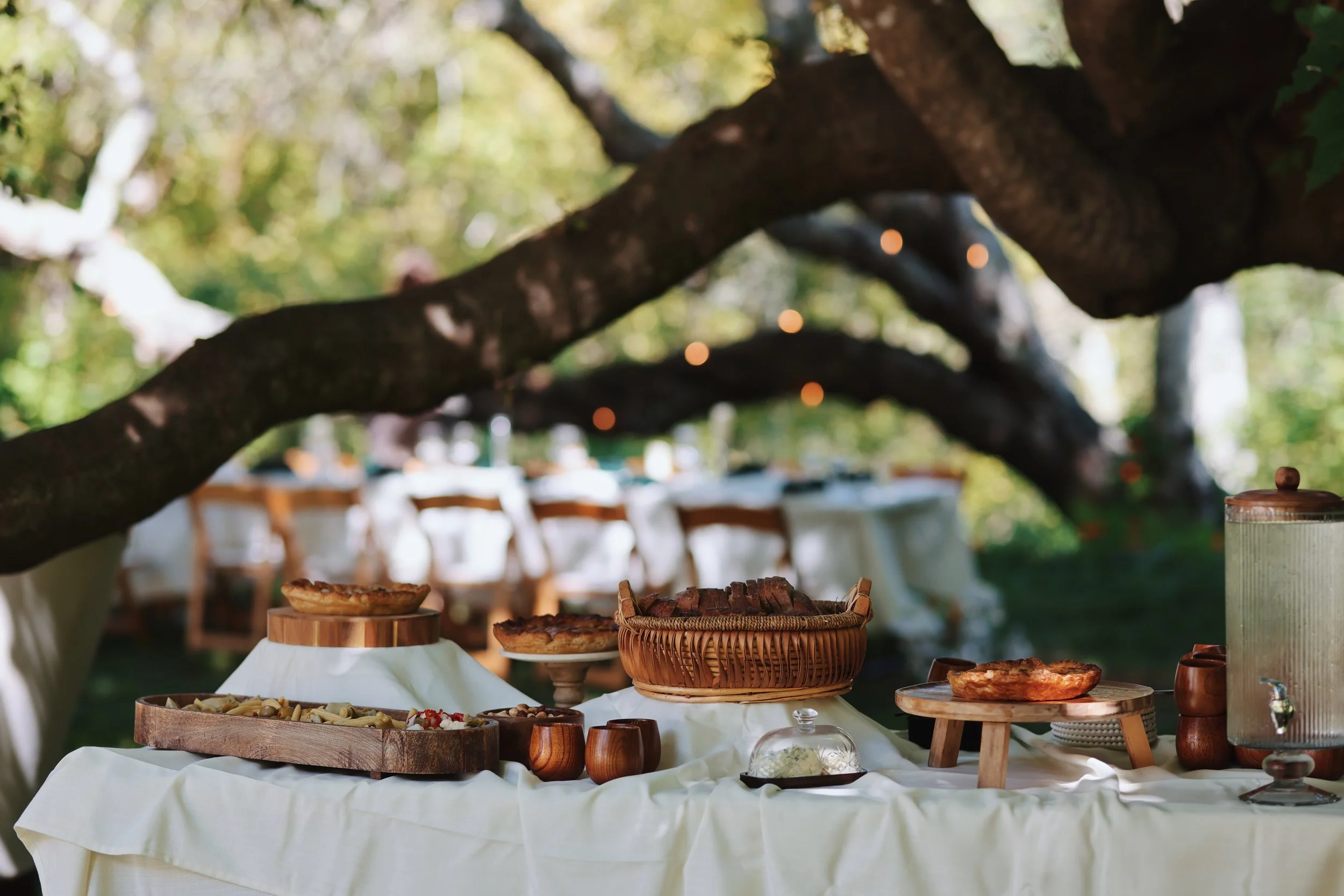
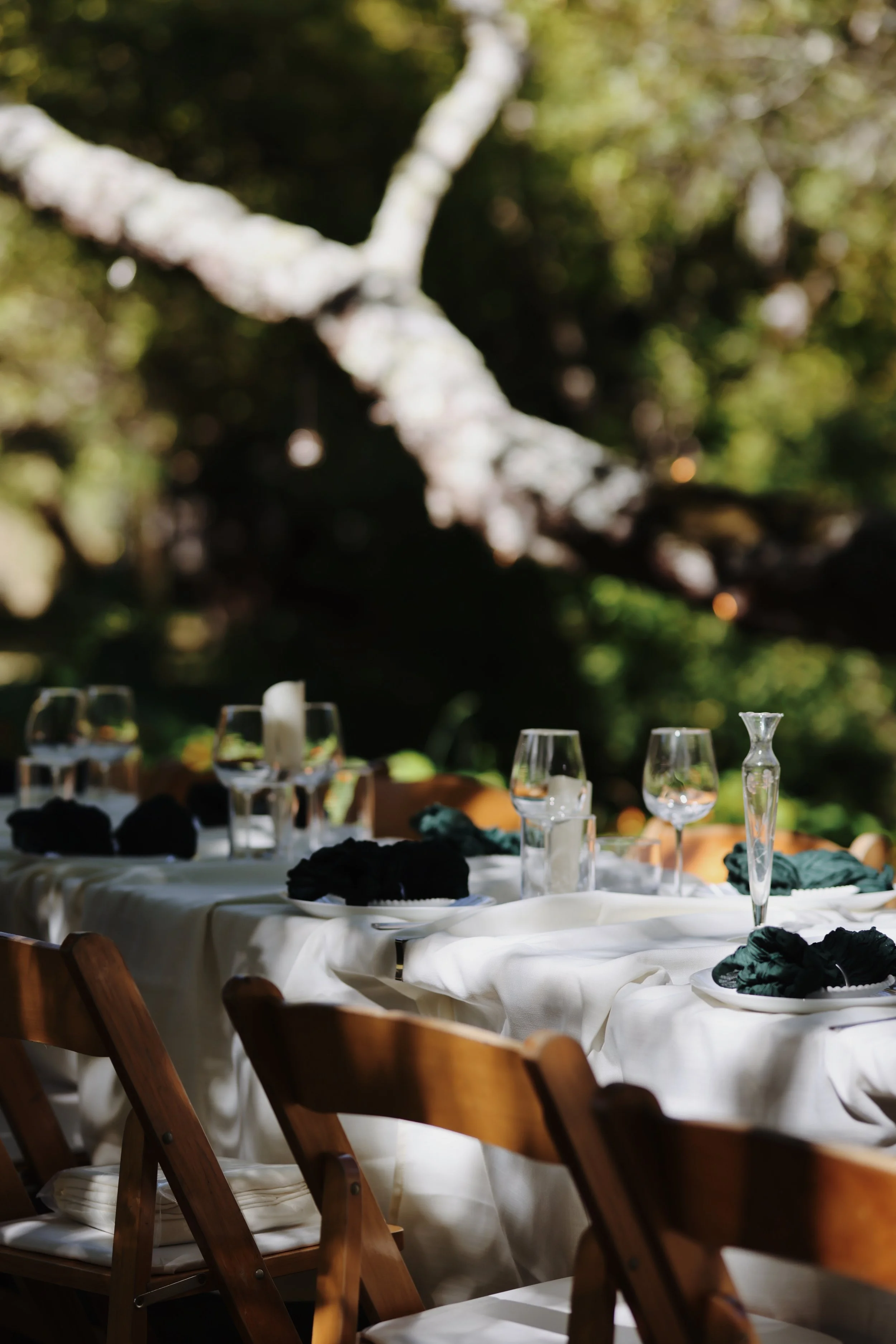
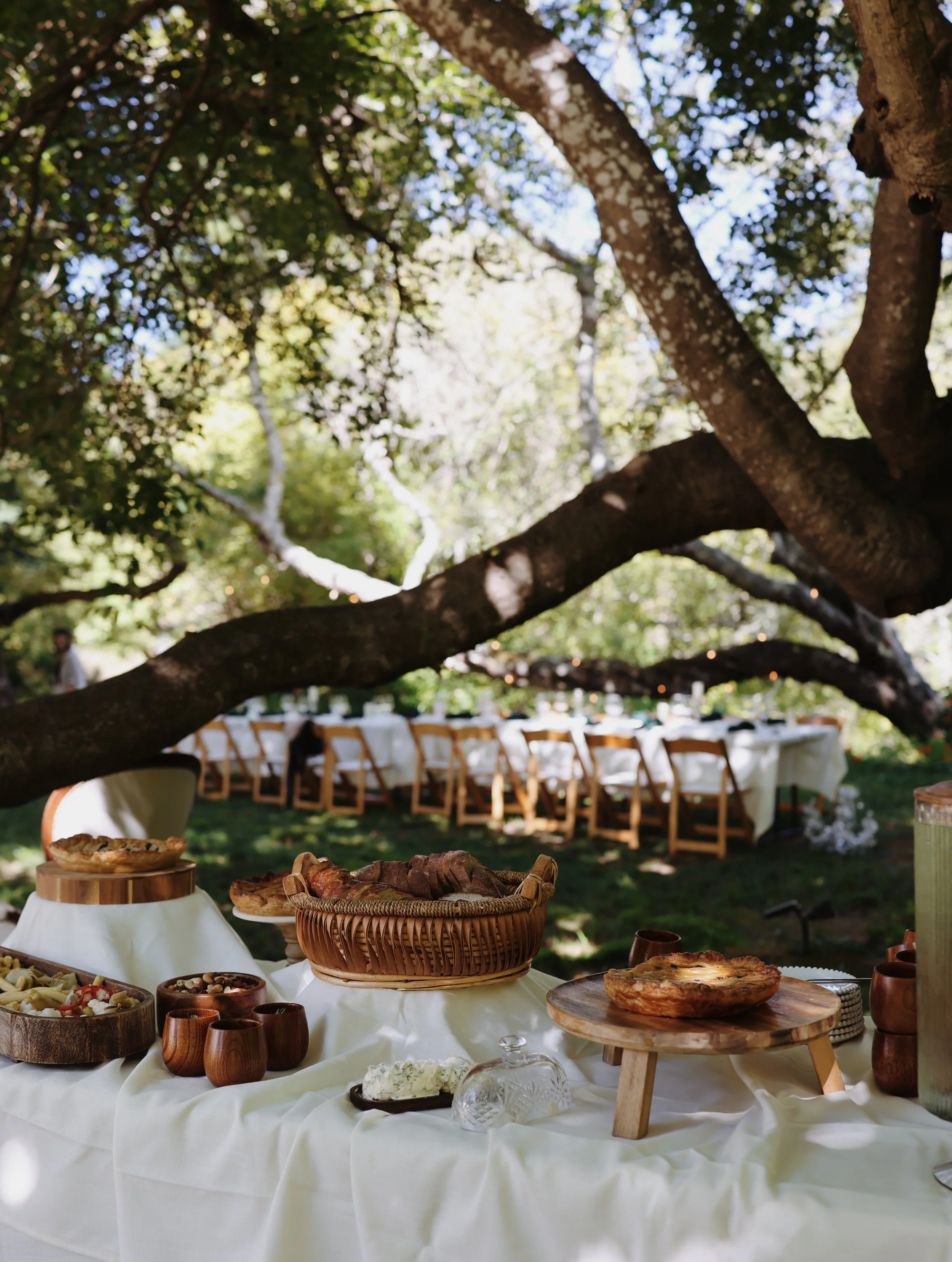
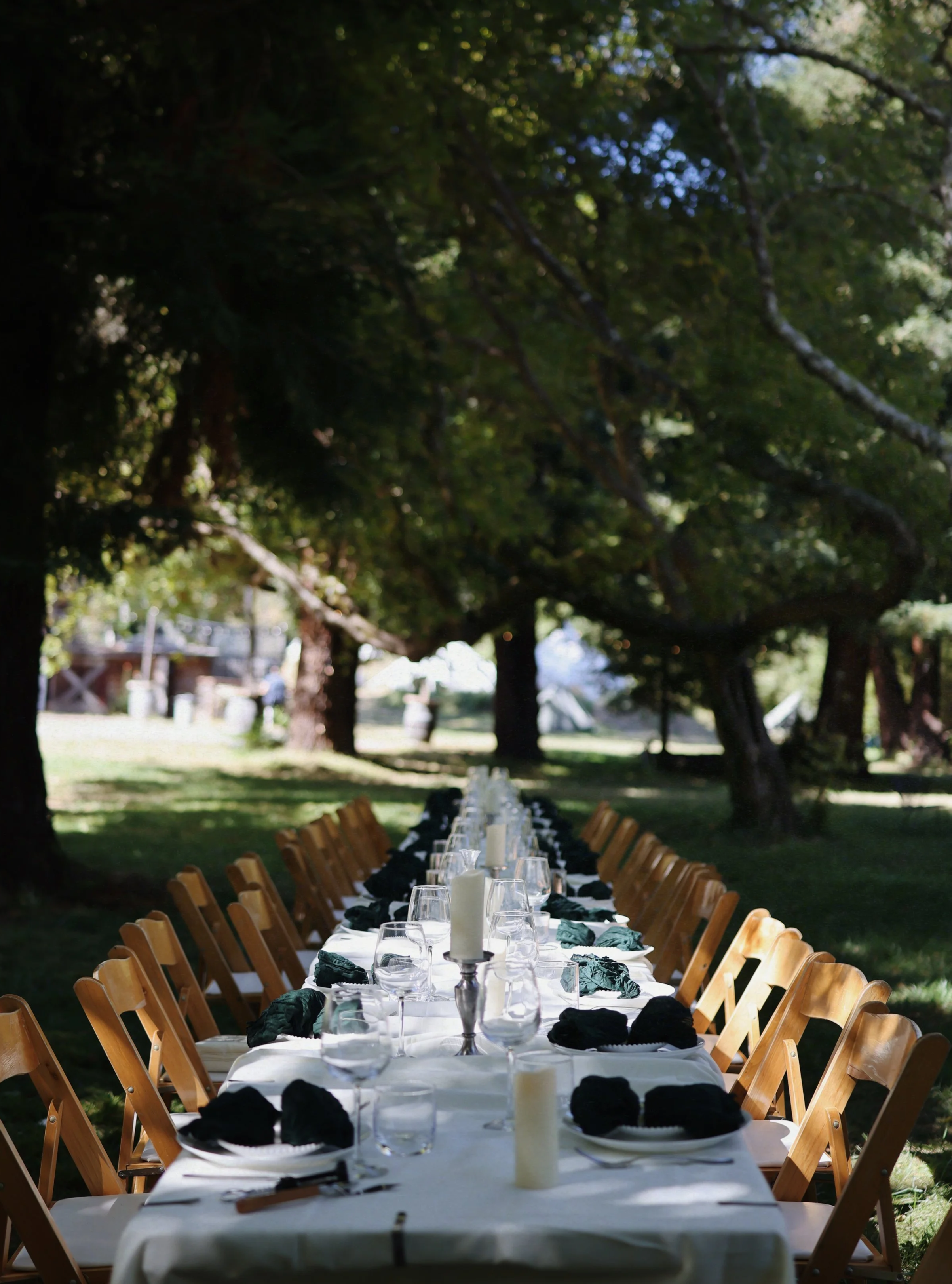
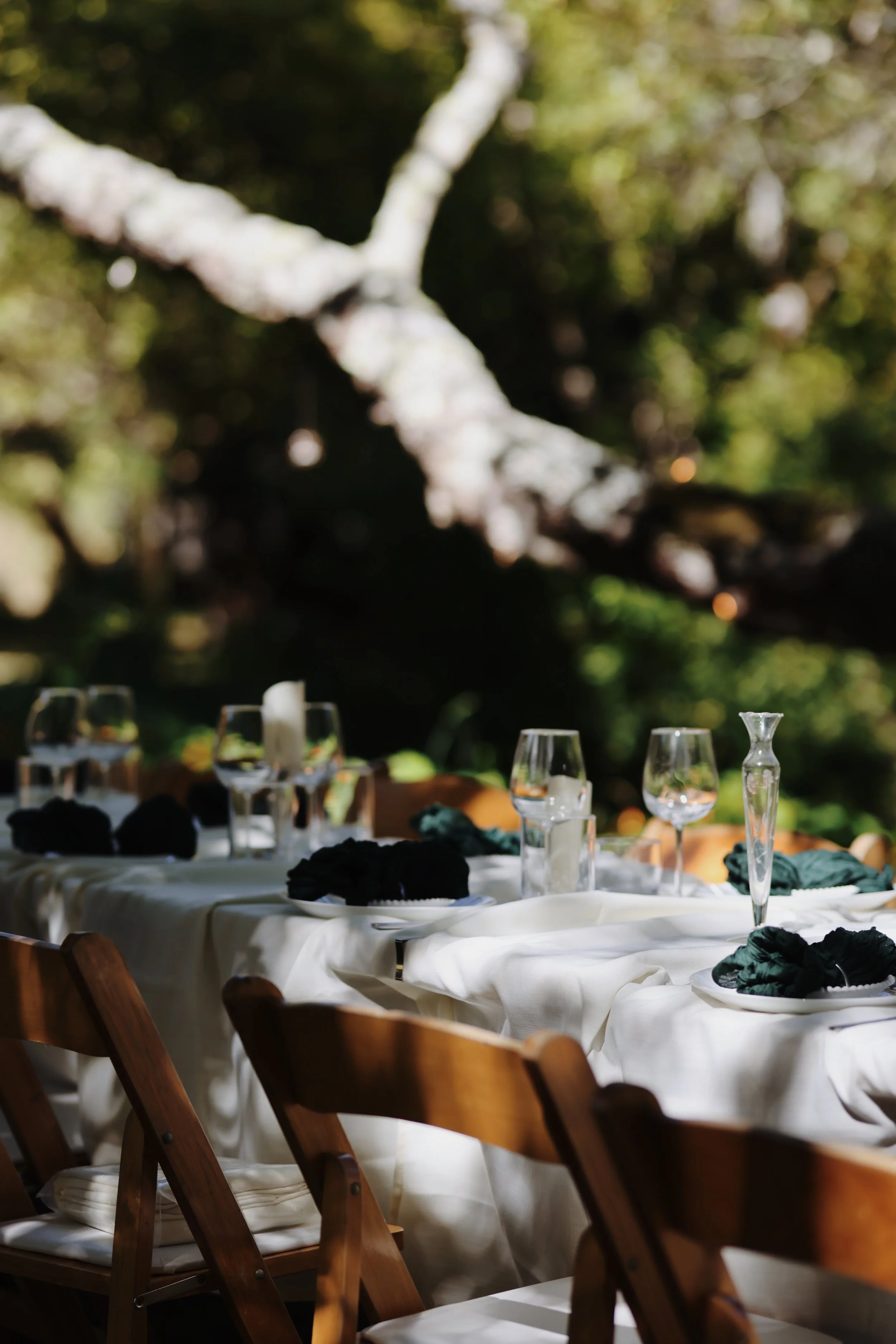
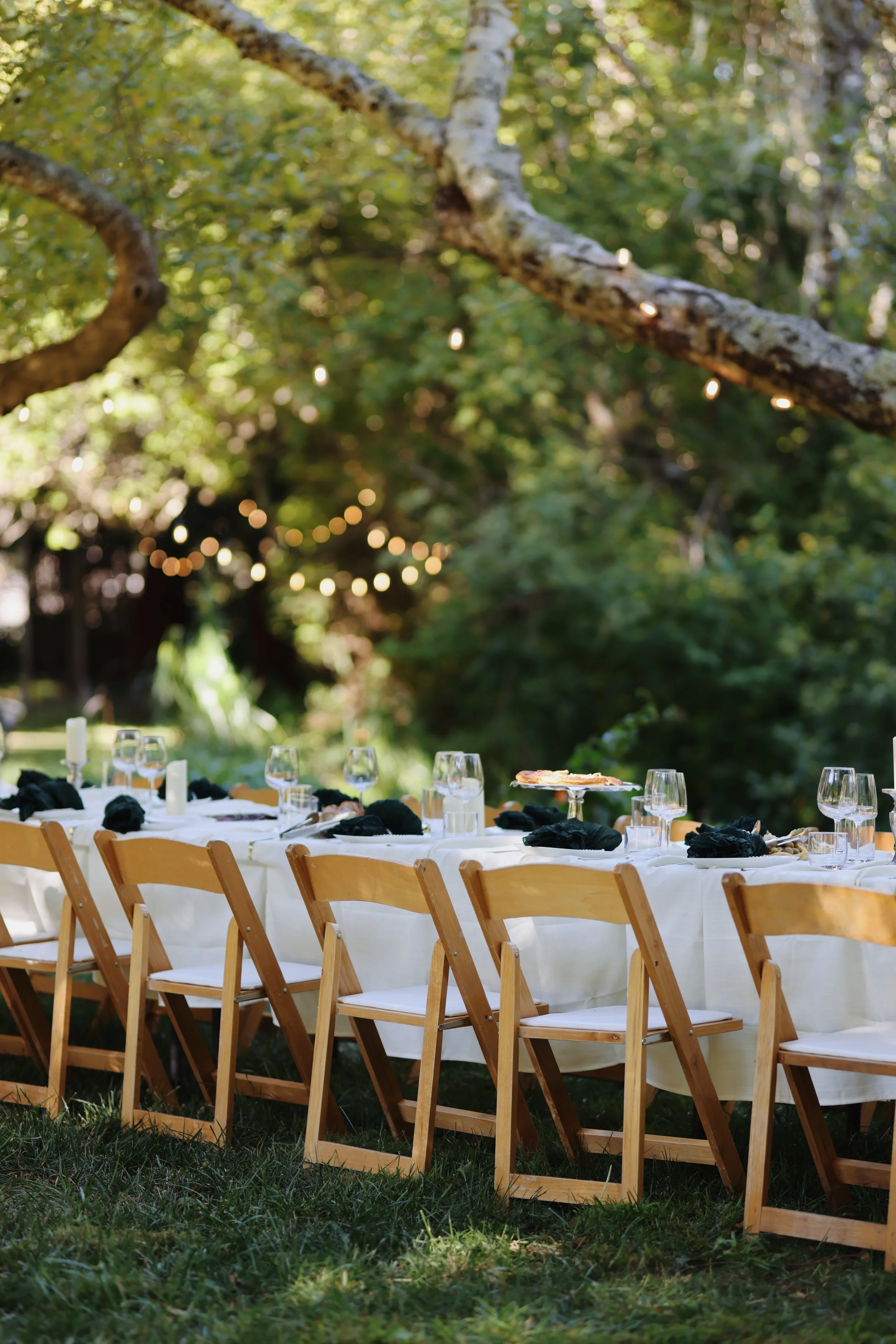
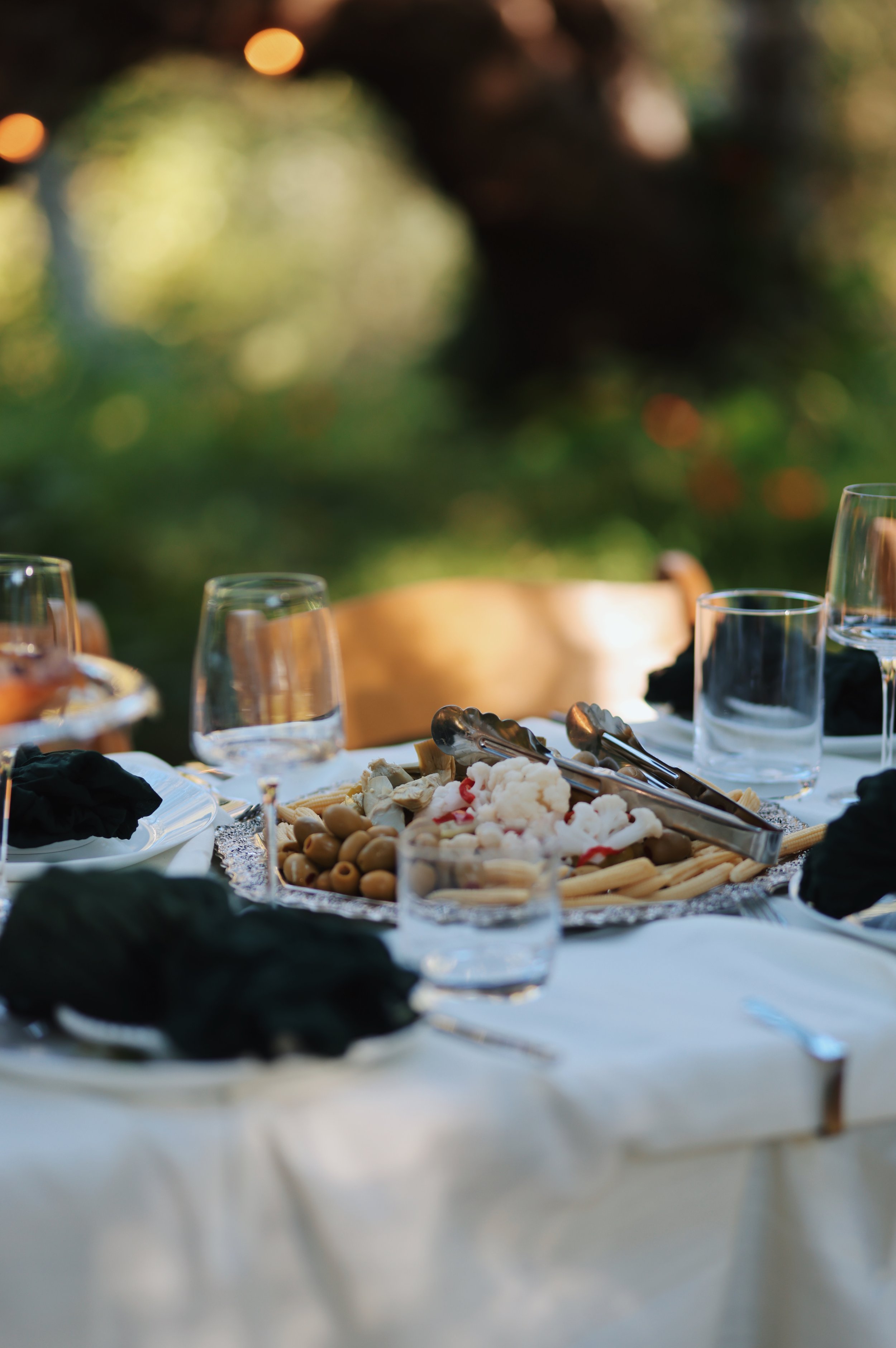
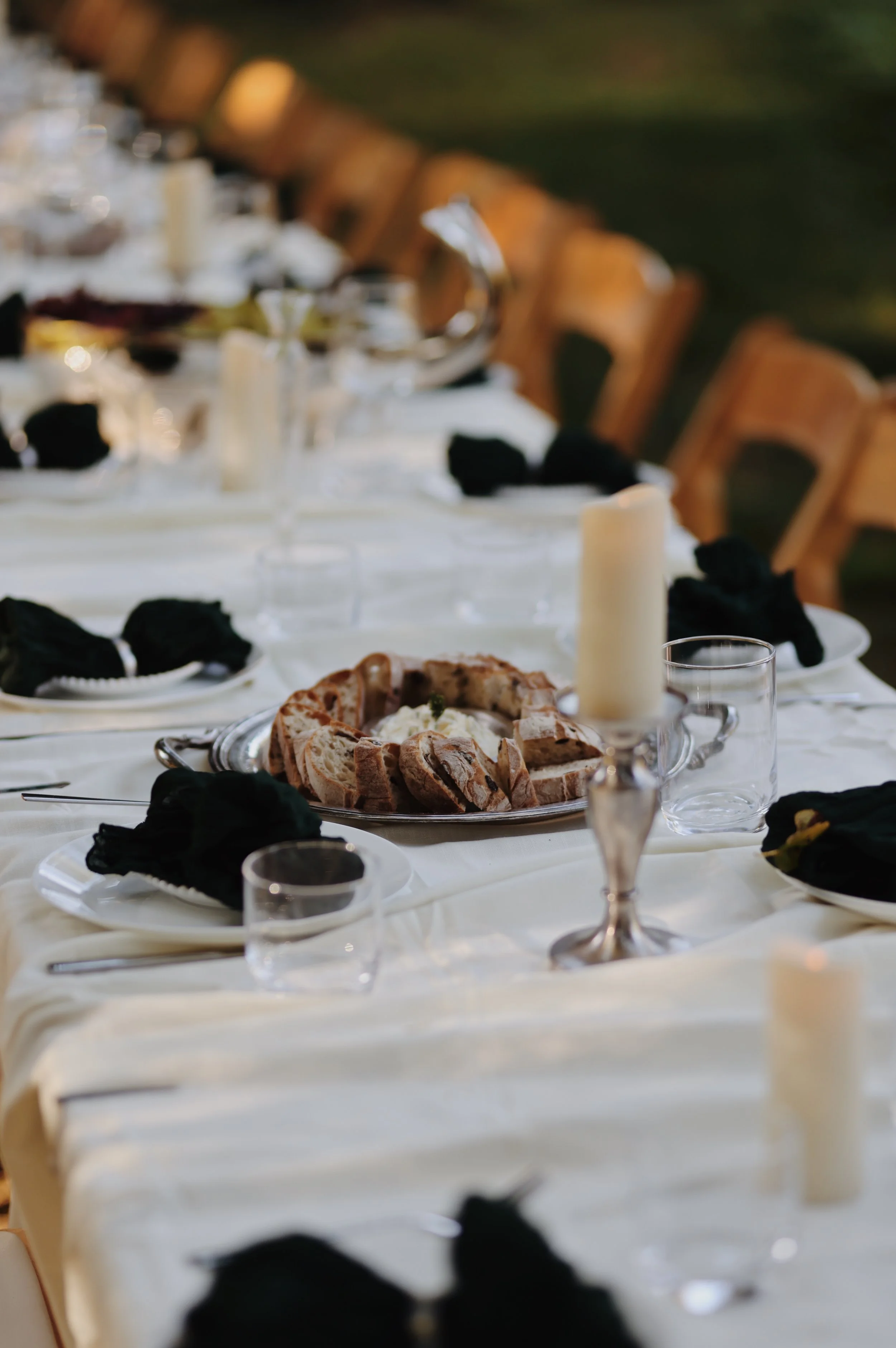
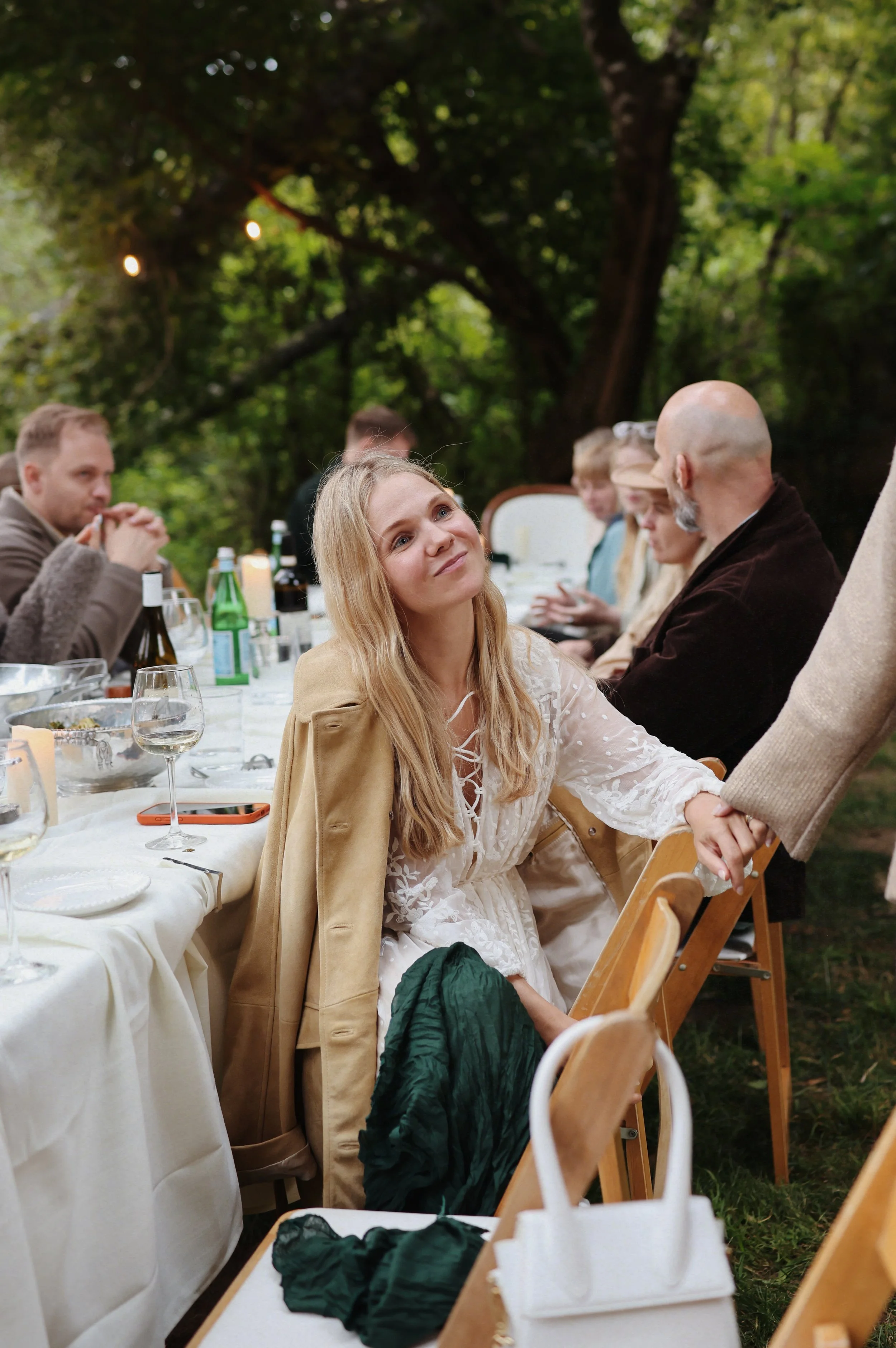
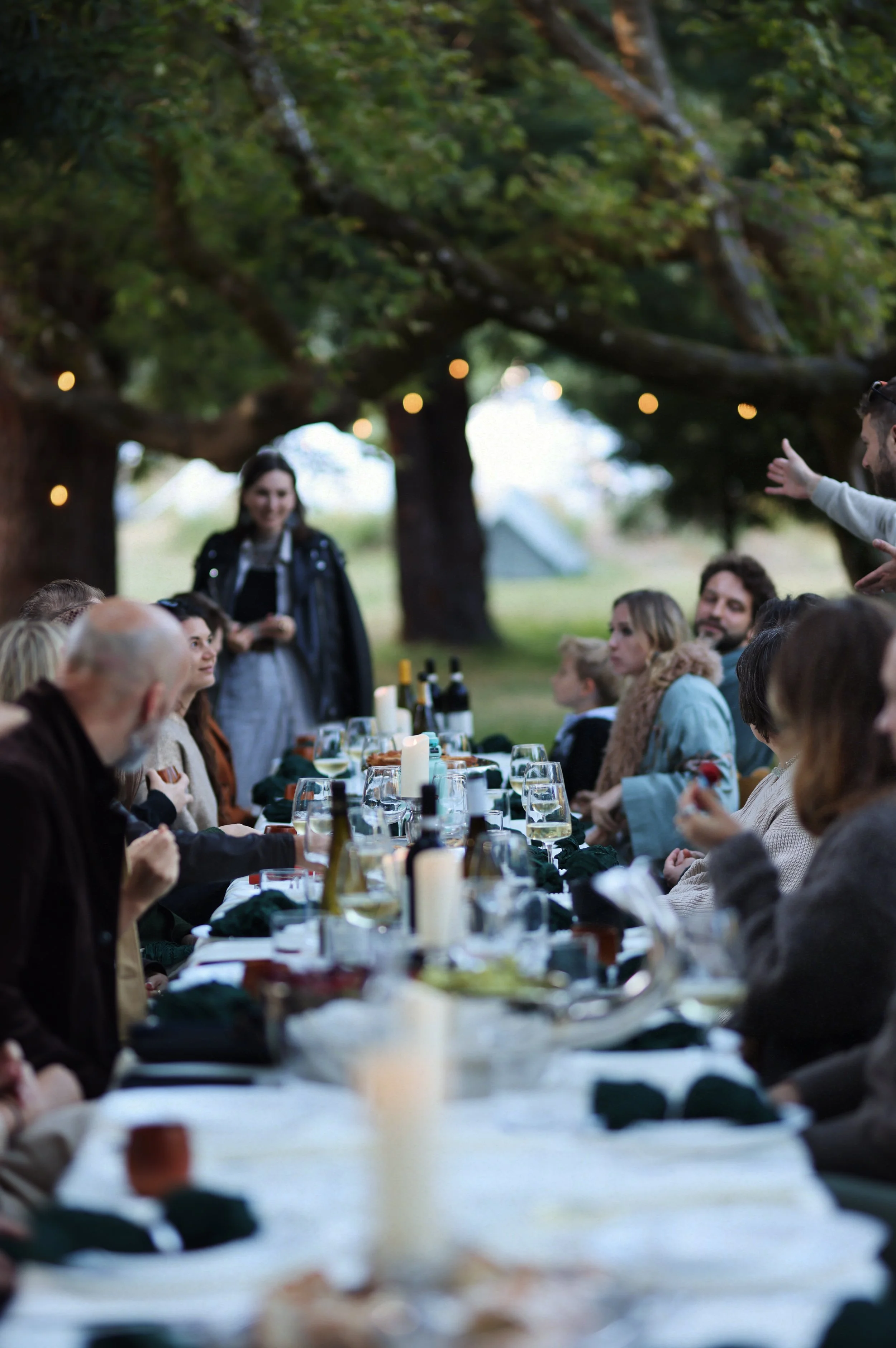
The Table — One long family-style table with ivory linen, white plates, dark-green gauze napkins, honey-toned wooden chairs, vintage silver-plated serving pieces, and candles.
Light — Warm string lights and flameless candles supported the transition from an afternoon workshop into an evening dinner.
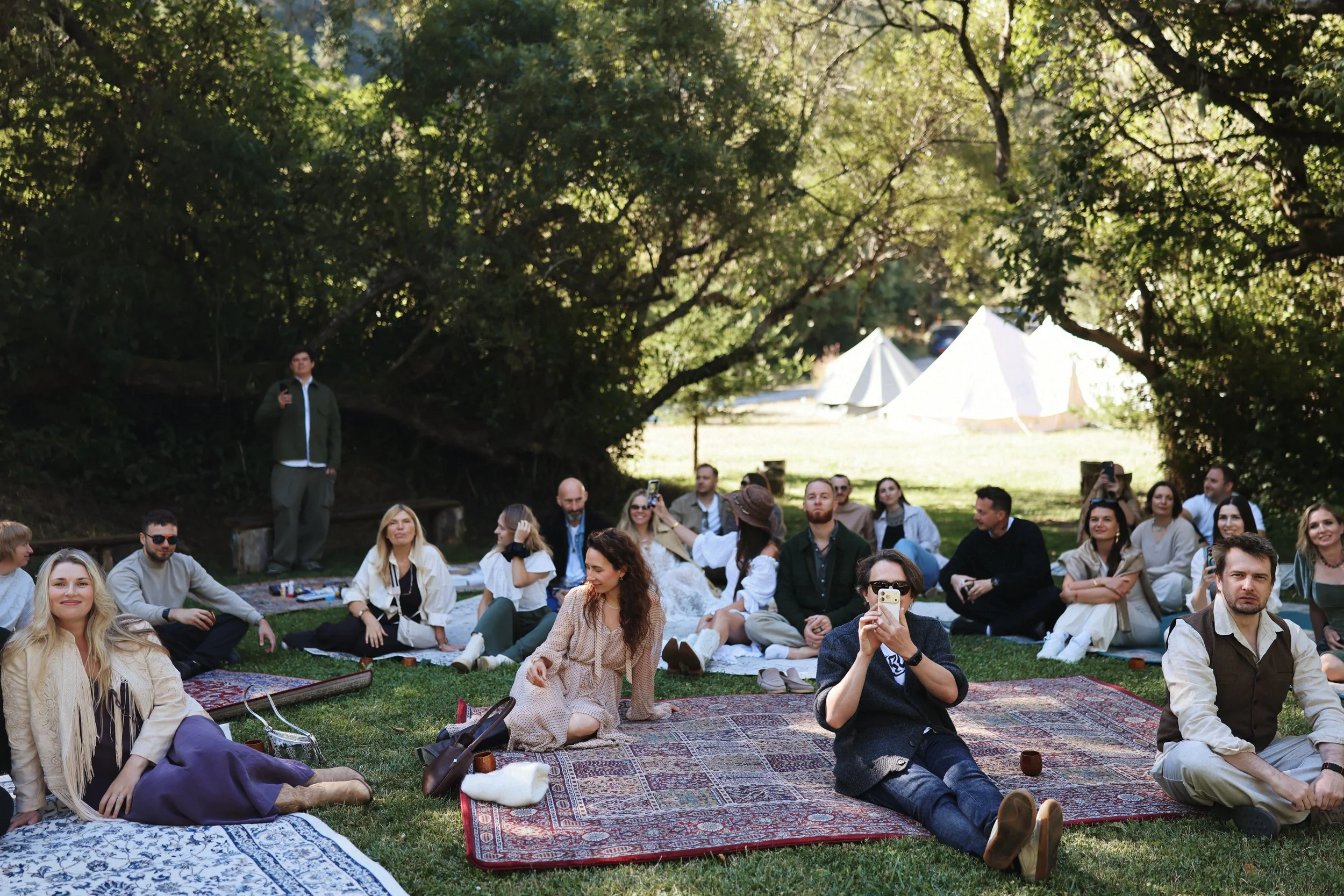
Ground — Layered rugs softened the forest floor and defined the workshop zone, creating a temporary interior within the landscape.
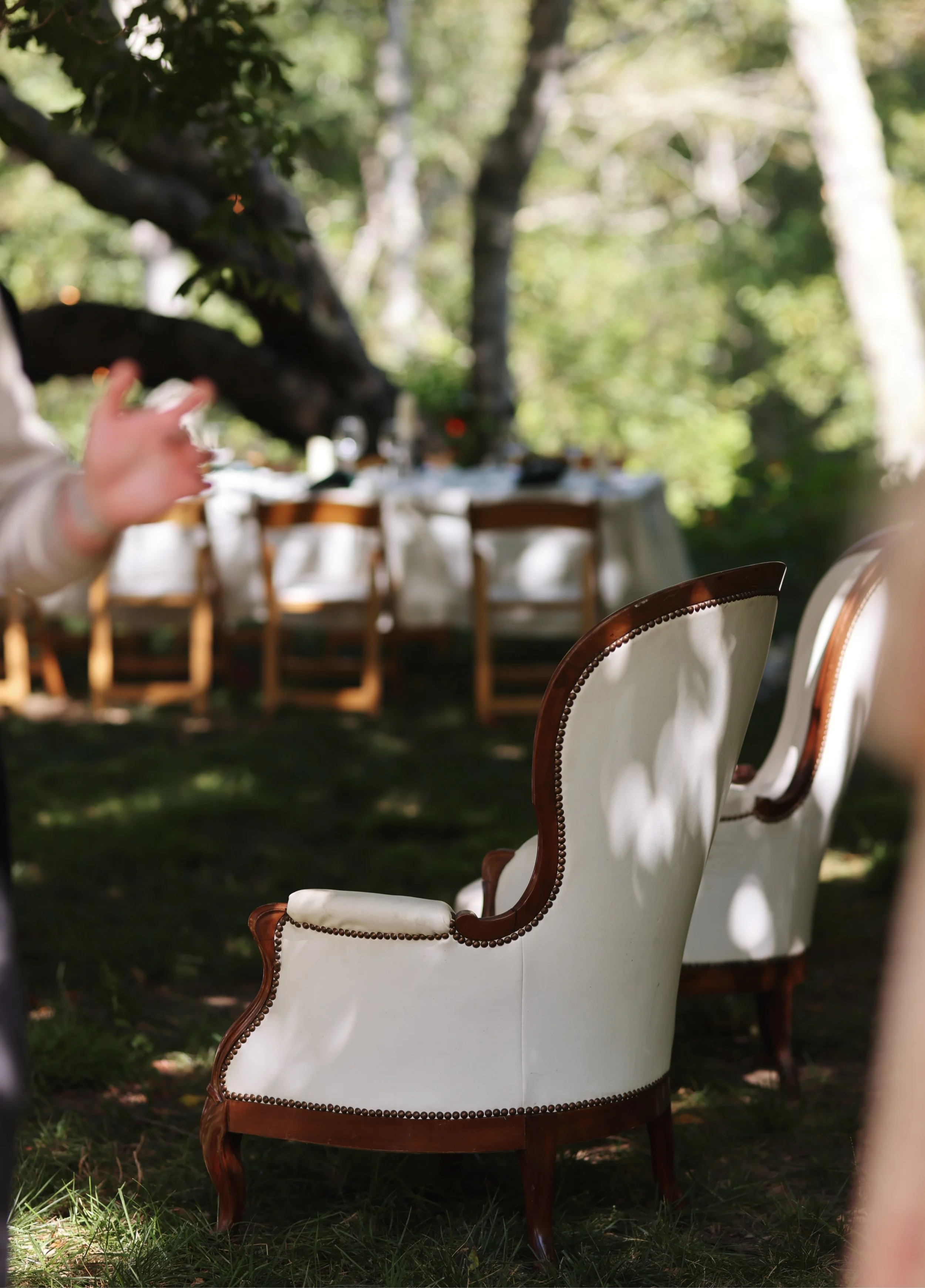
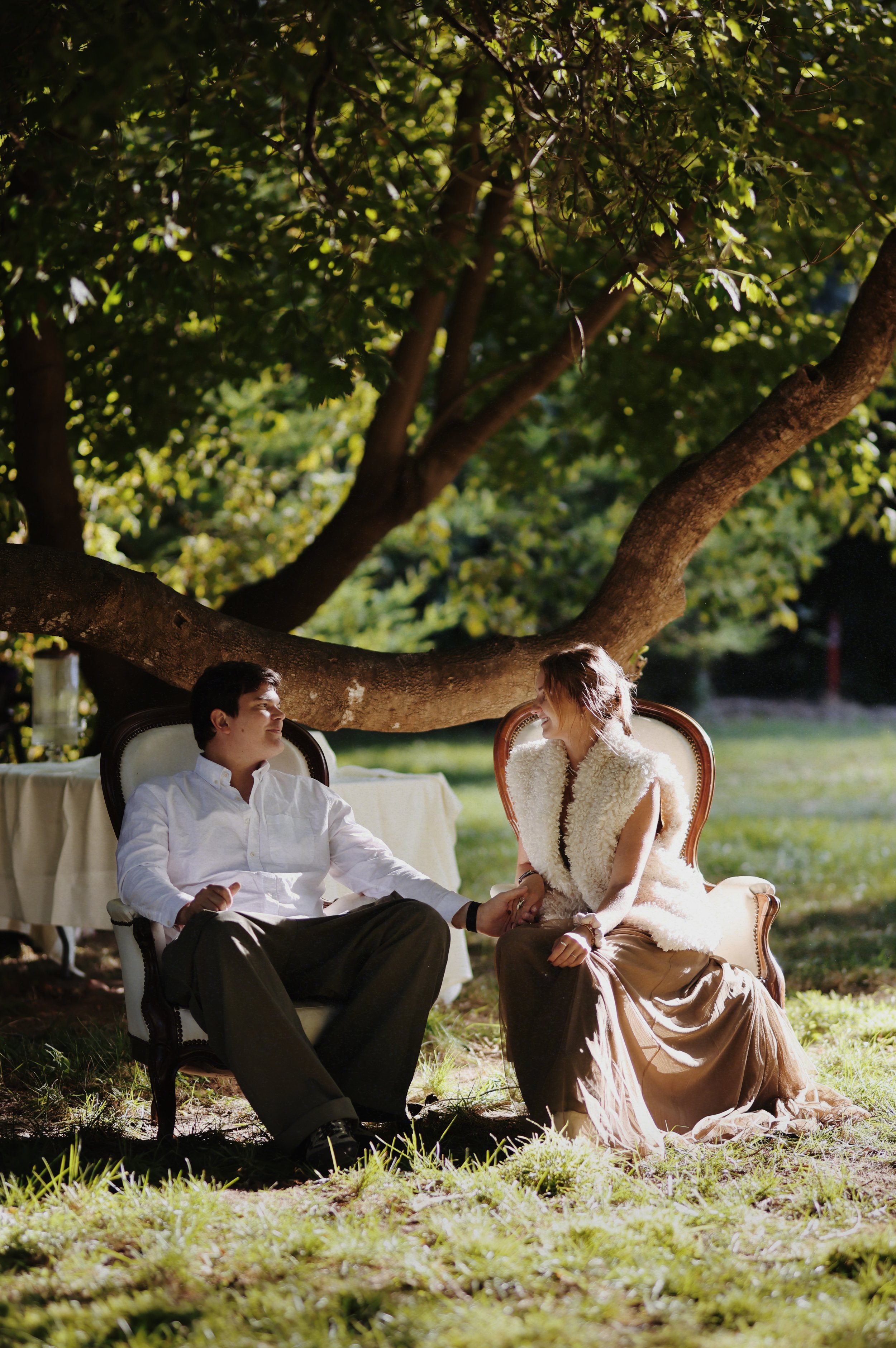
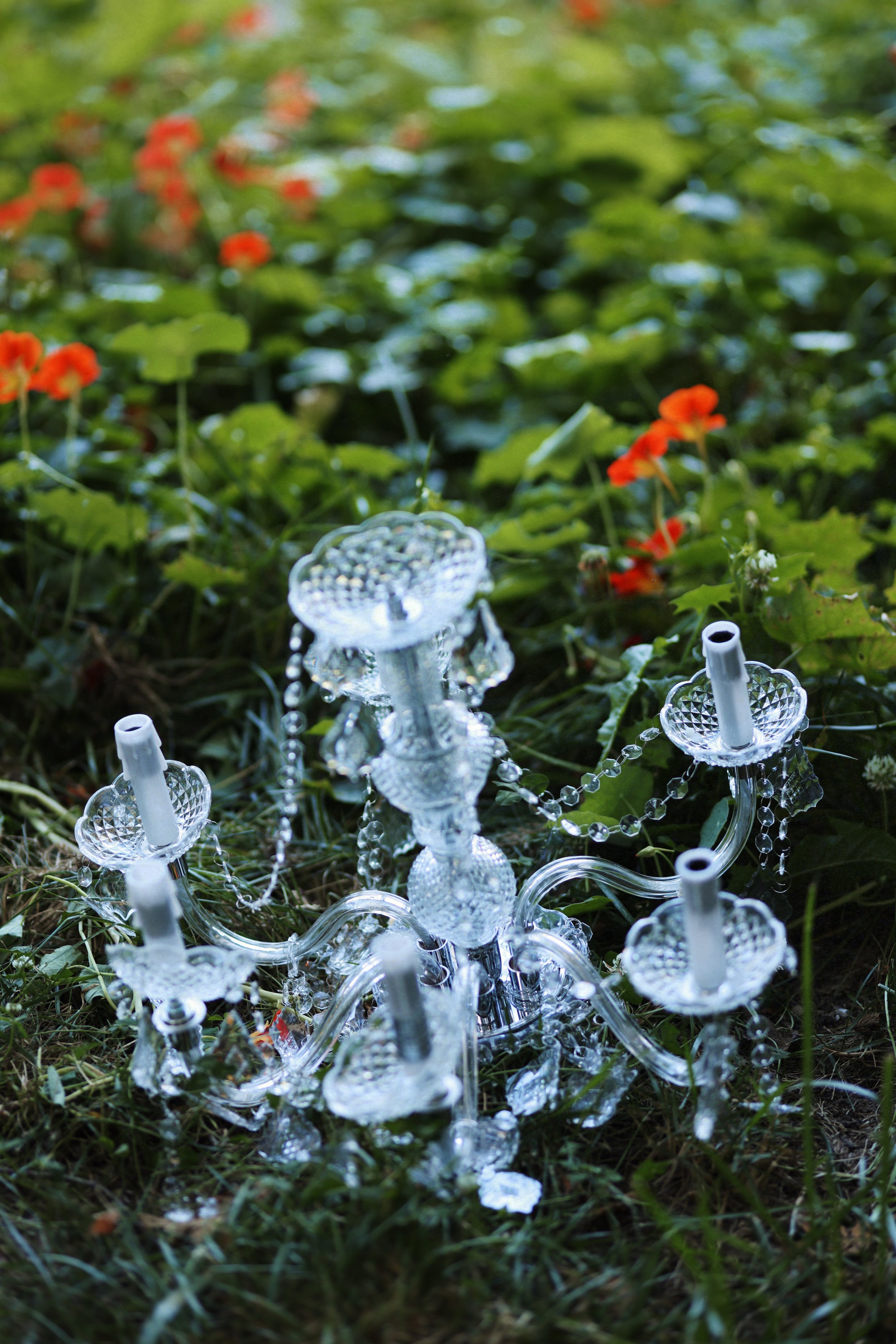
Furniture — Vintage and thrifted armchairs, wooden sculptures, and restrained surreal details brought domestic intimacy into the outdoor setting.
Palette — Ivory, green, silver, moss, and natural wood.
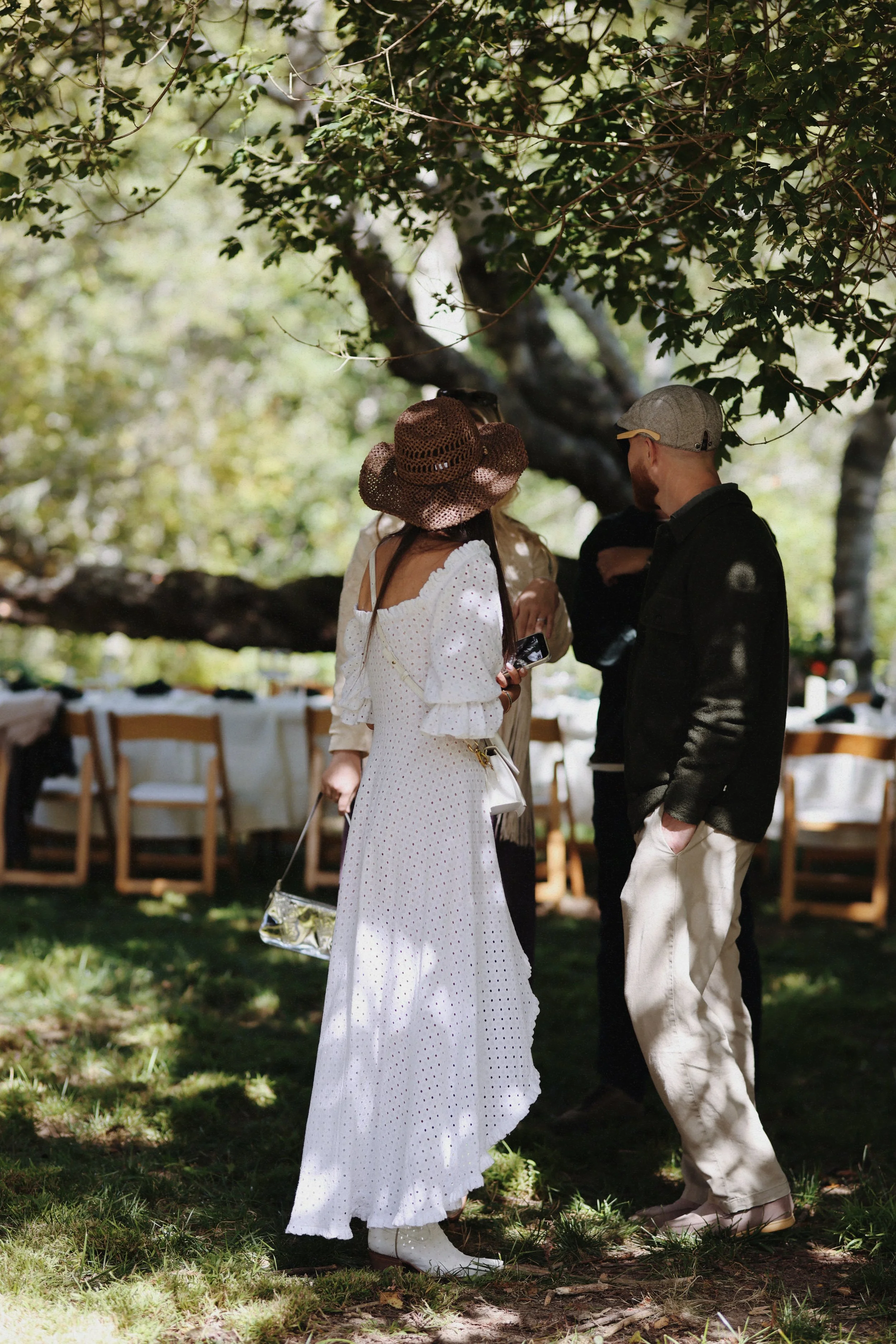
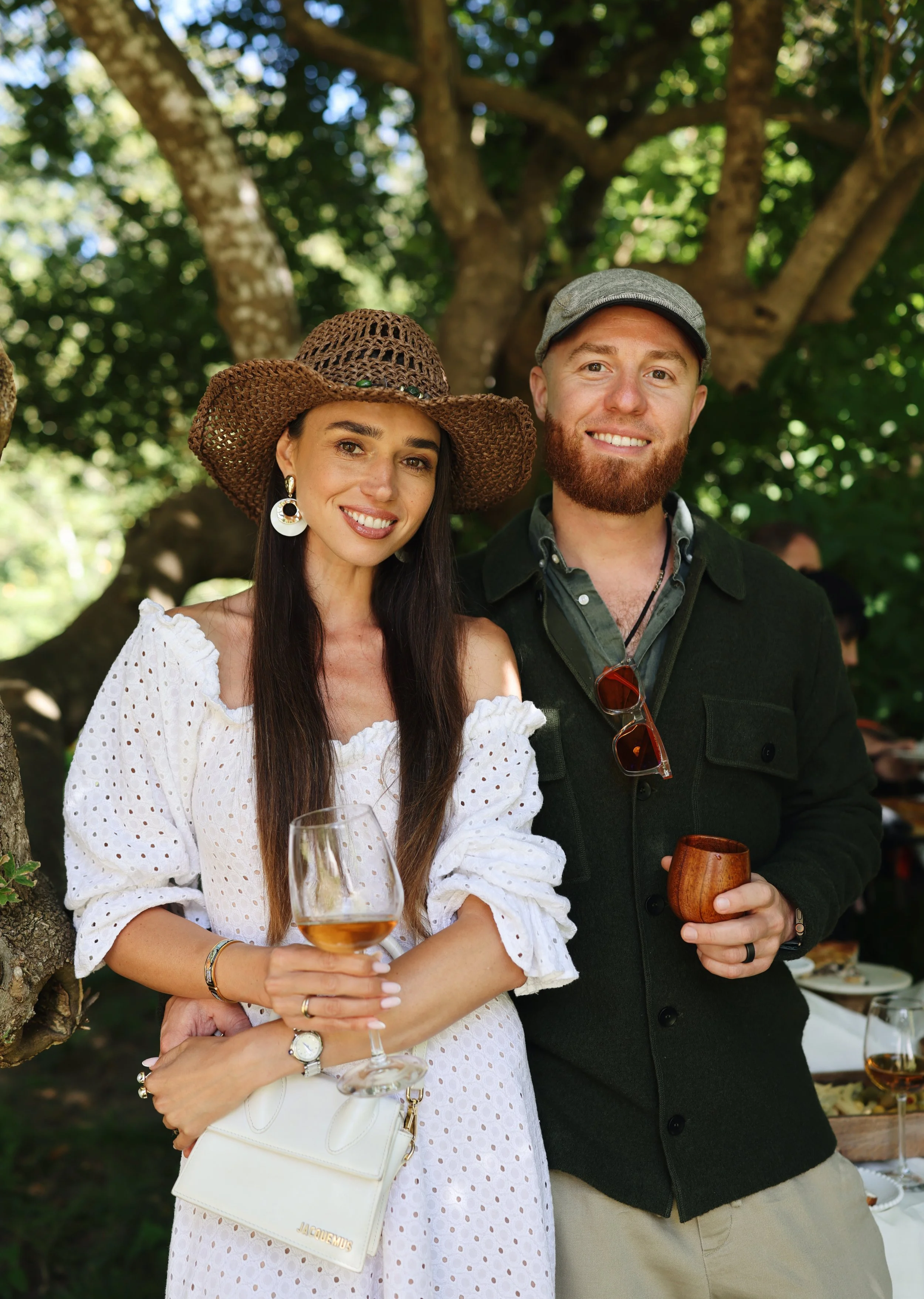
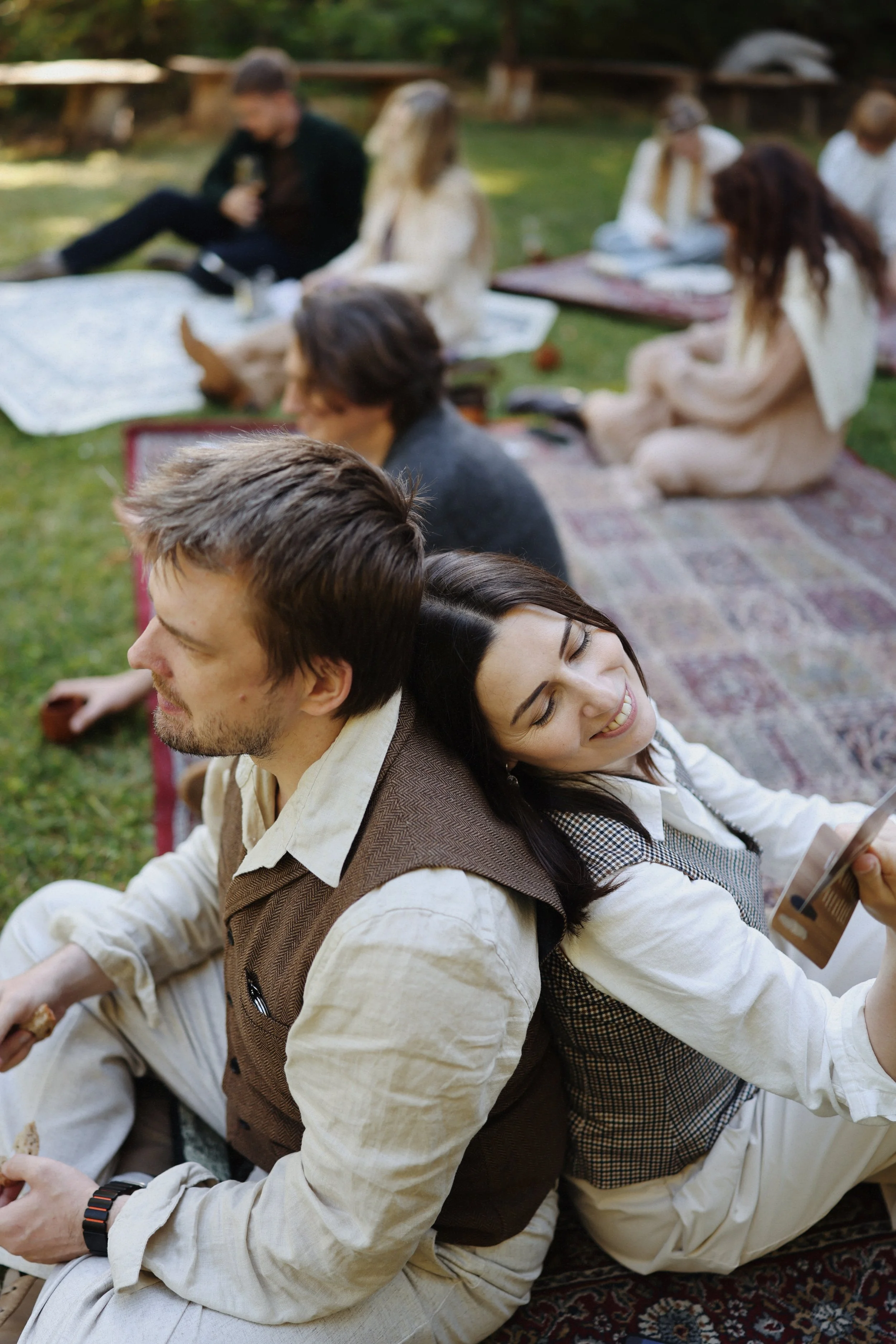
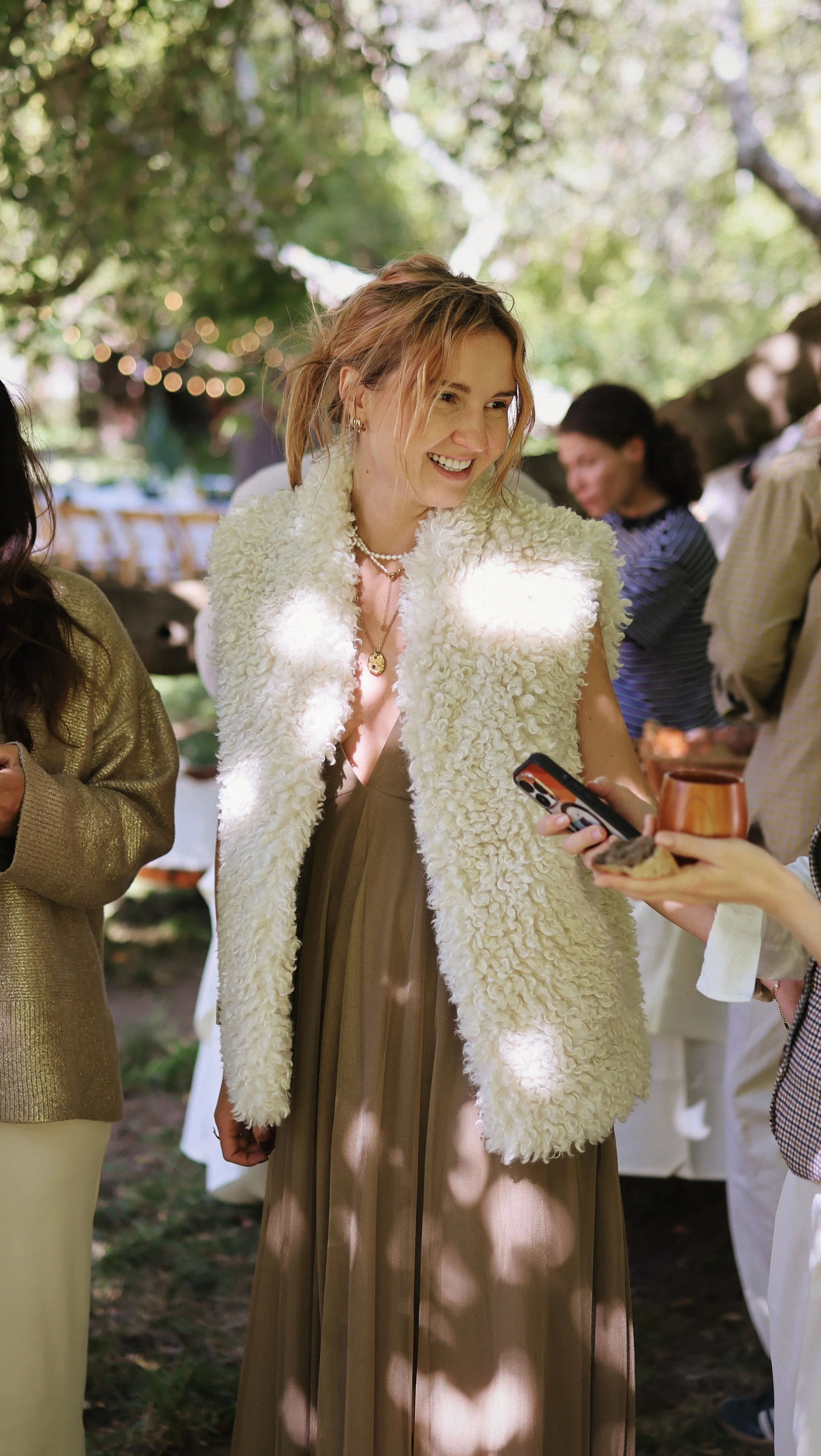
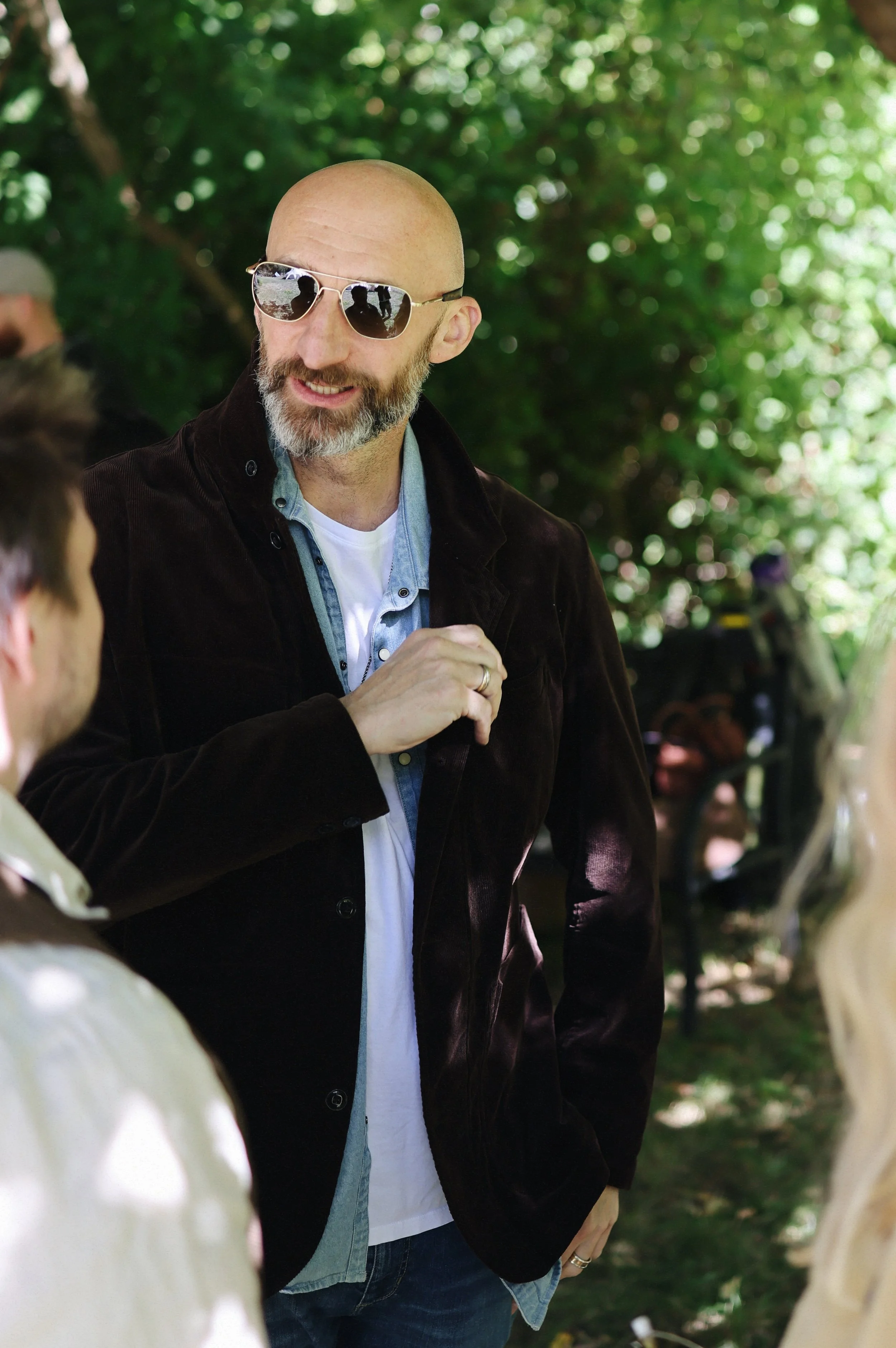
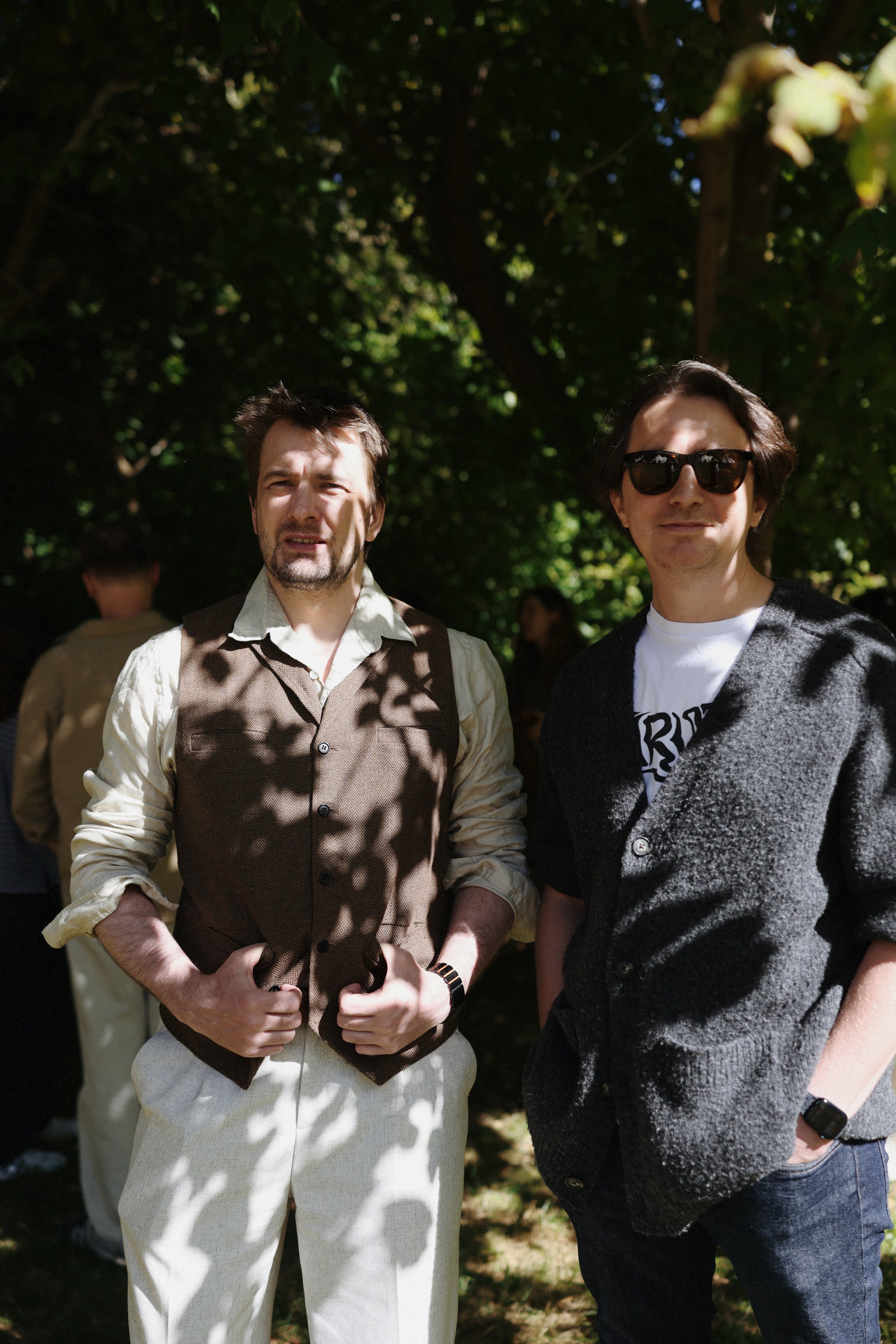
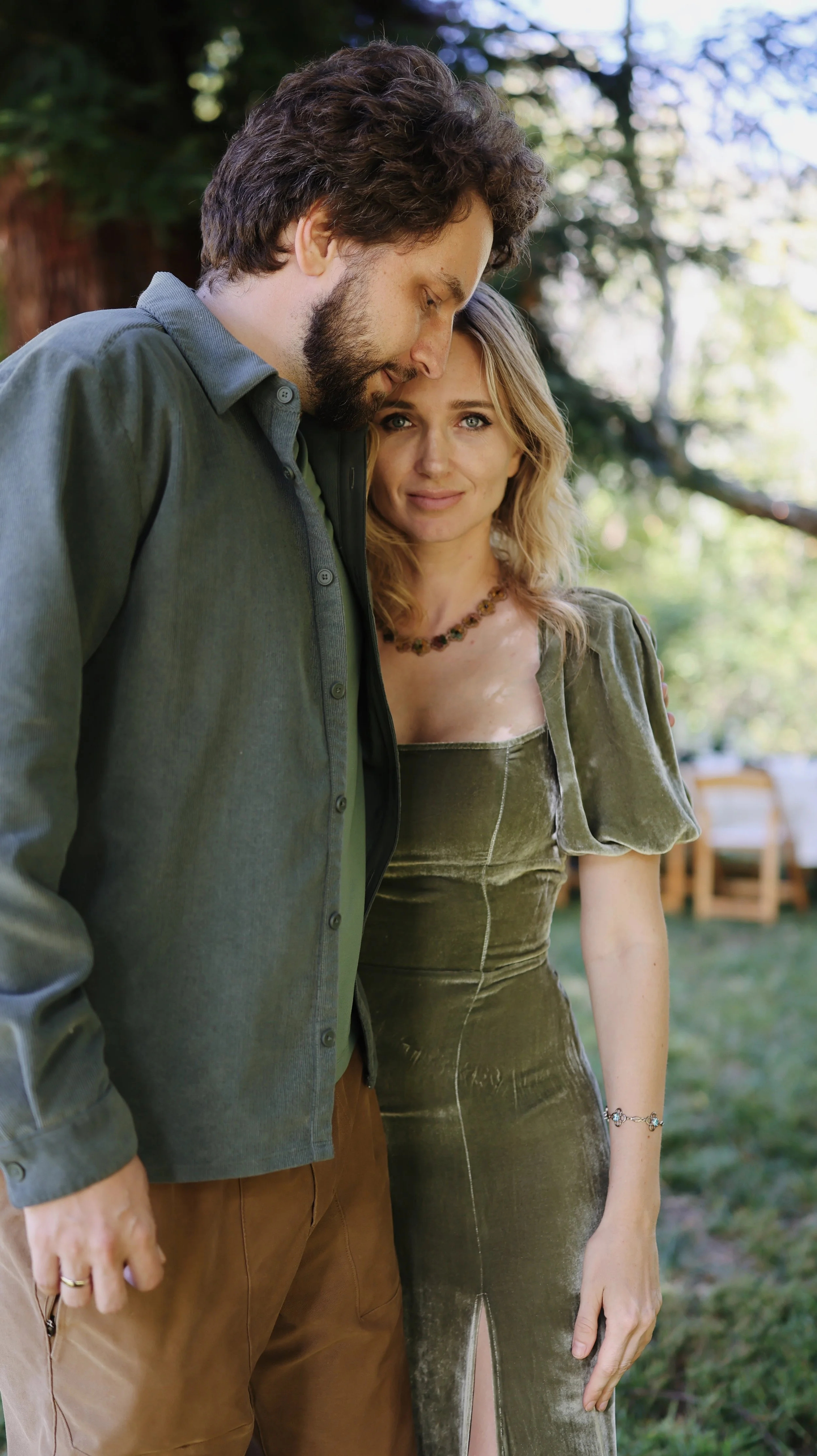
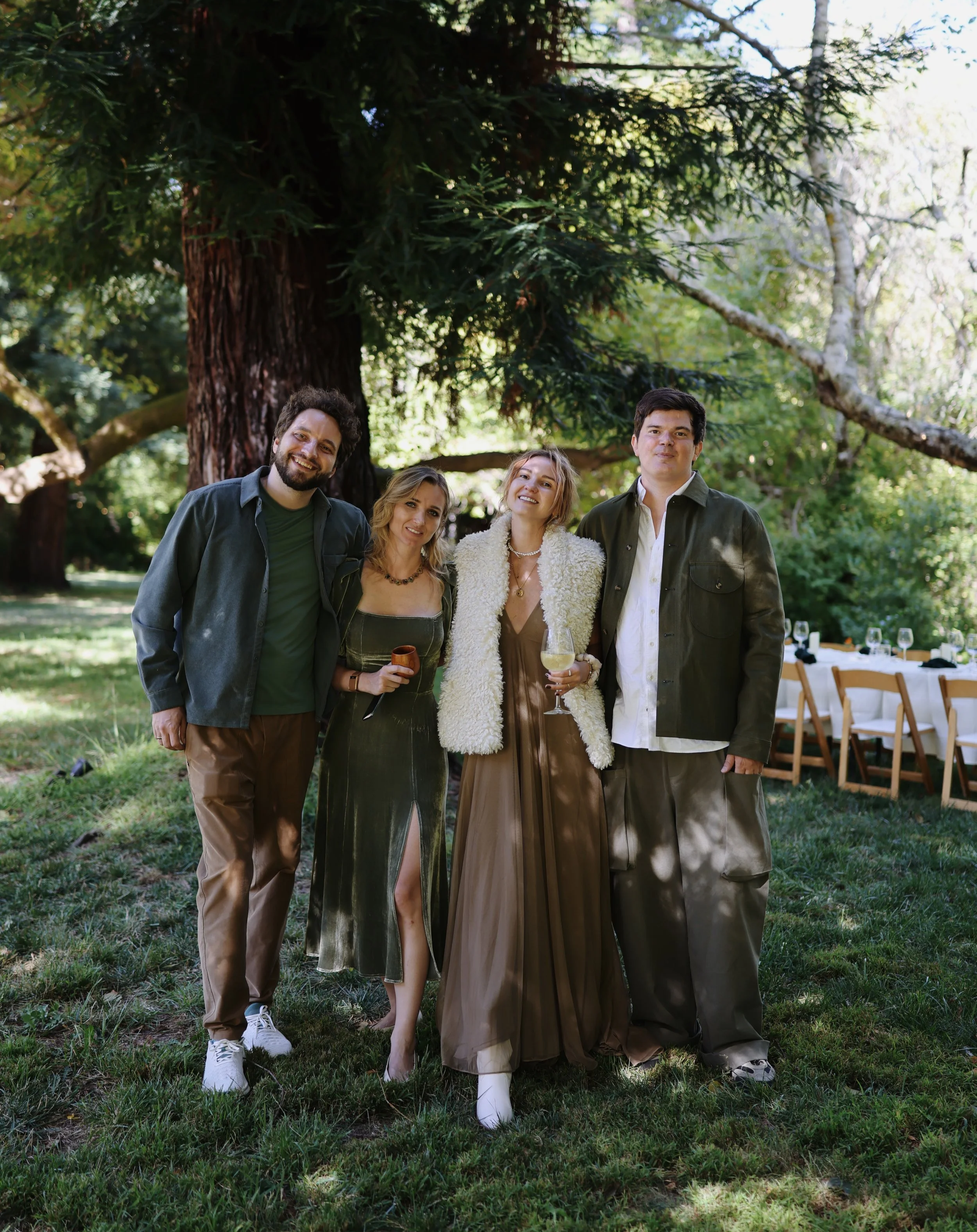
Dress Code — The visual environment extended to the guests. The direction was dressed up, layered, and appropriate for the forest floor: boots, silk, corduroy, dresses, jackets, hats, and the occasional tie.
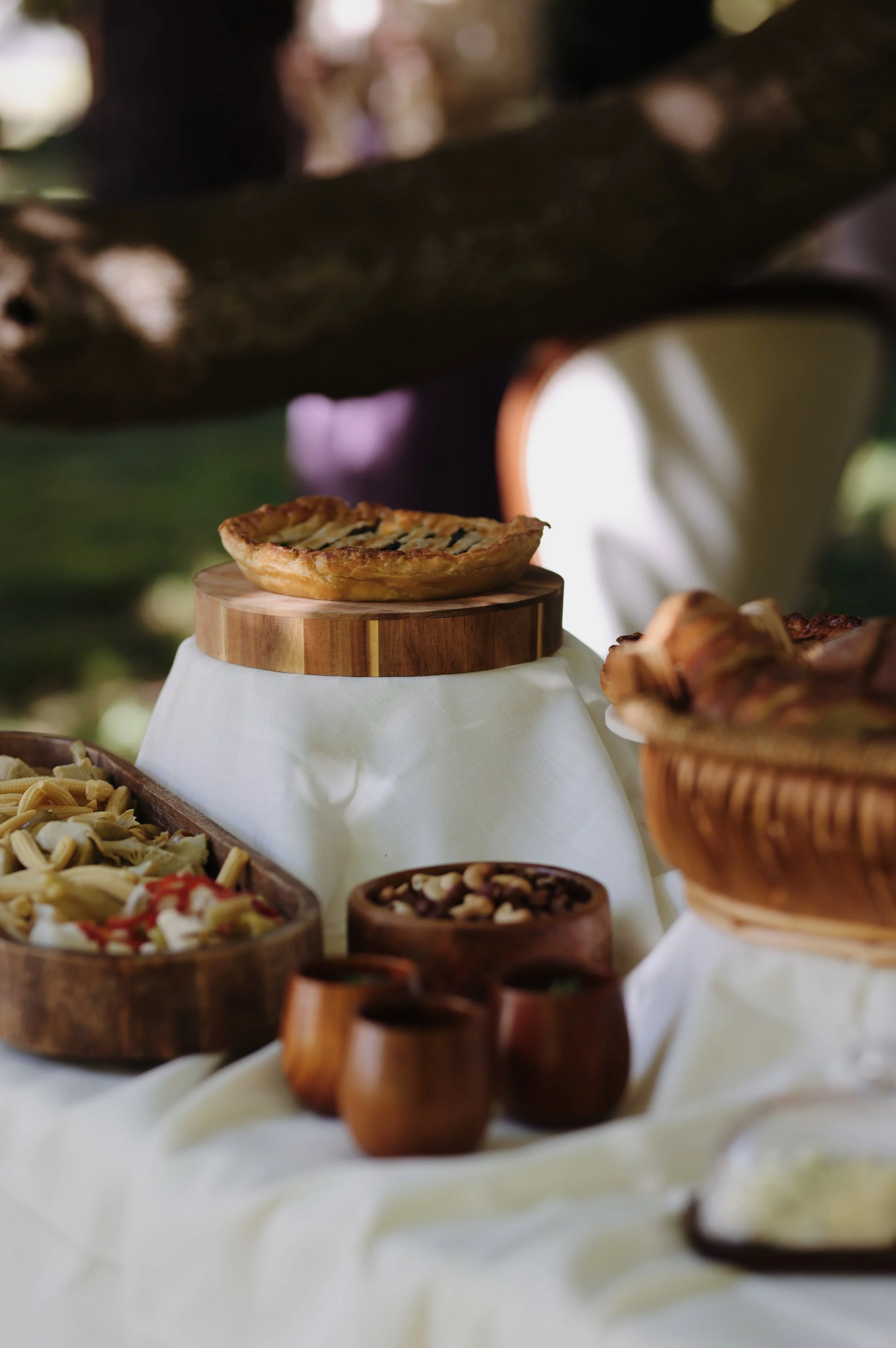
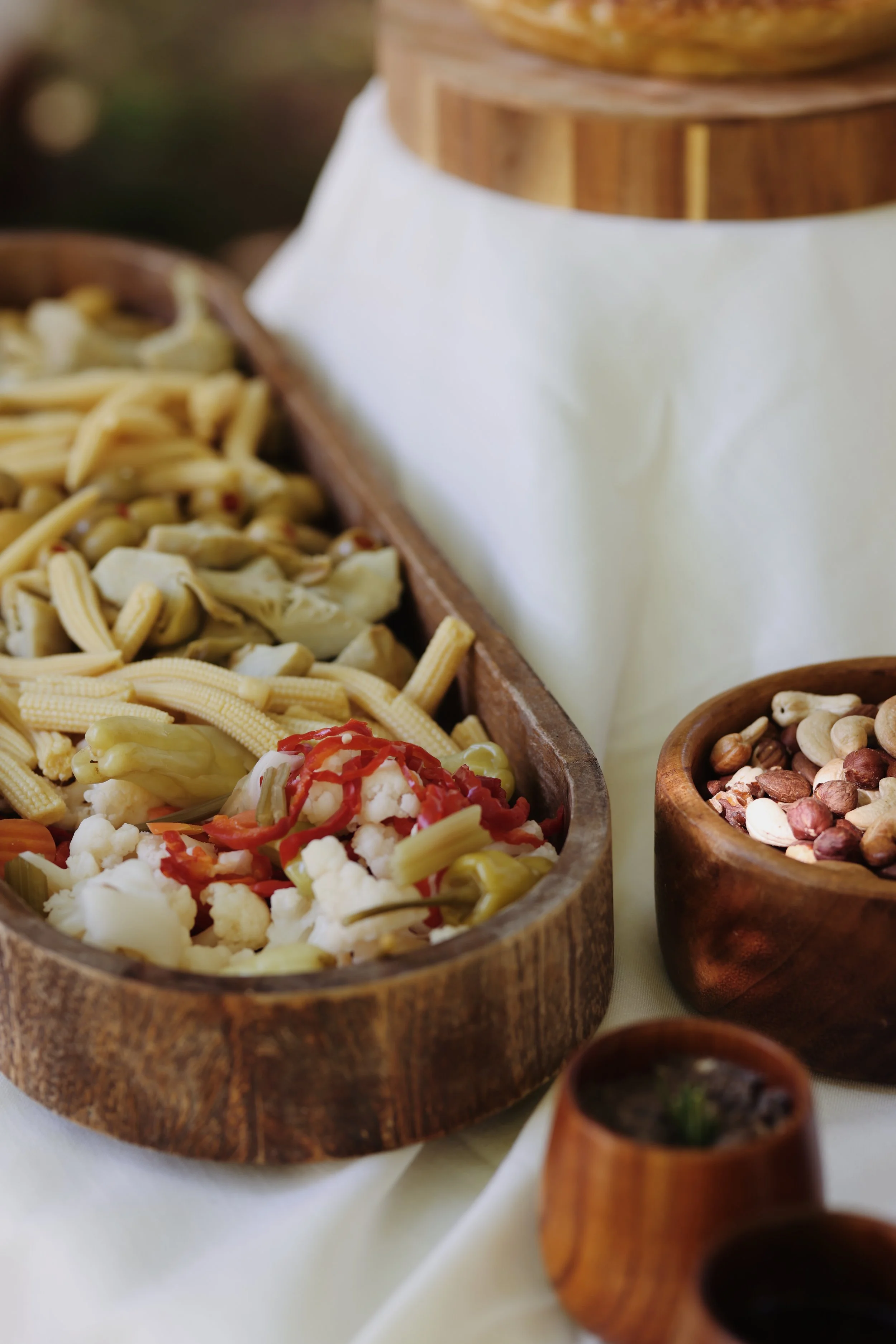
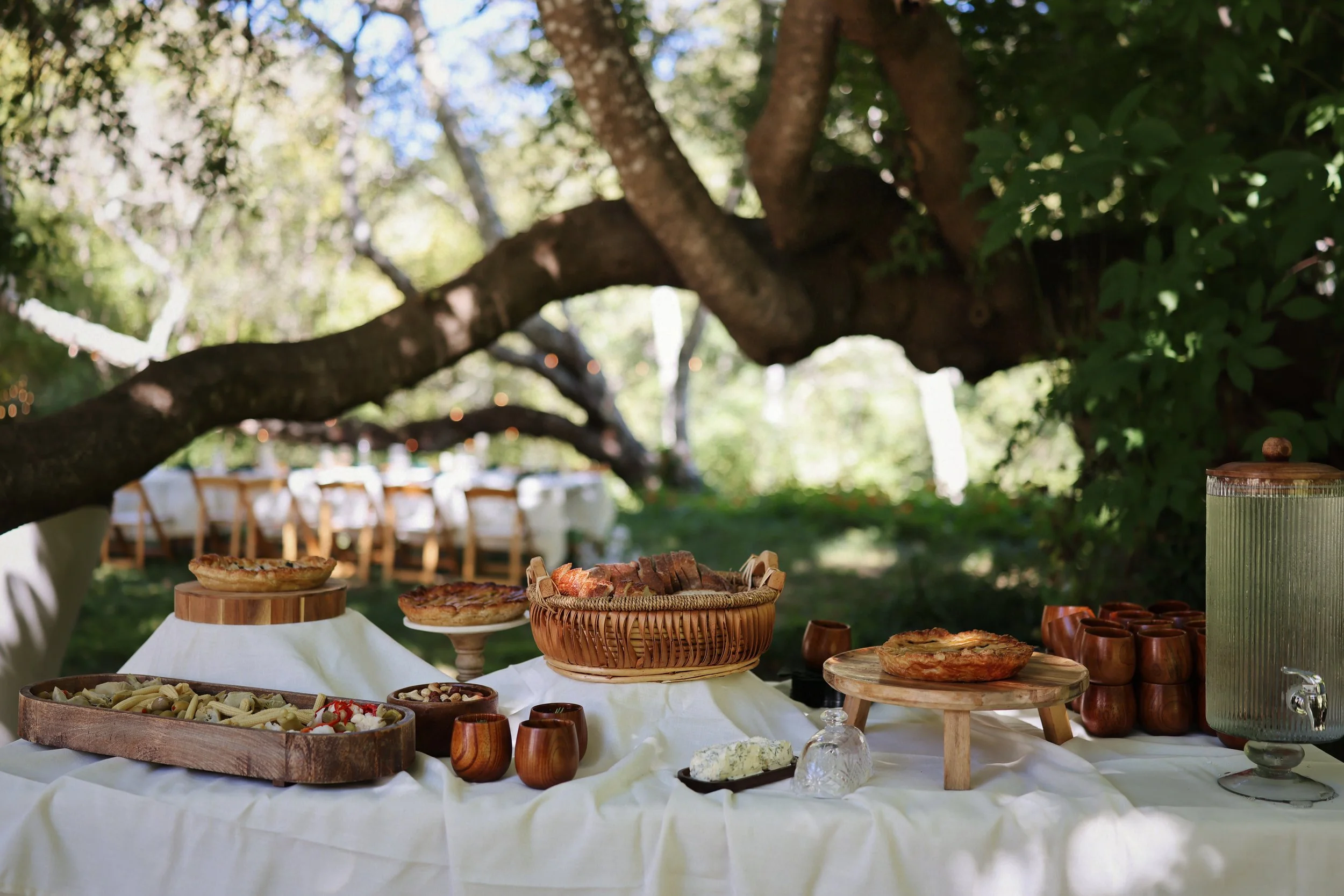
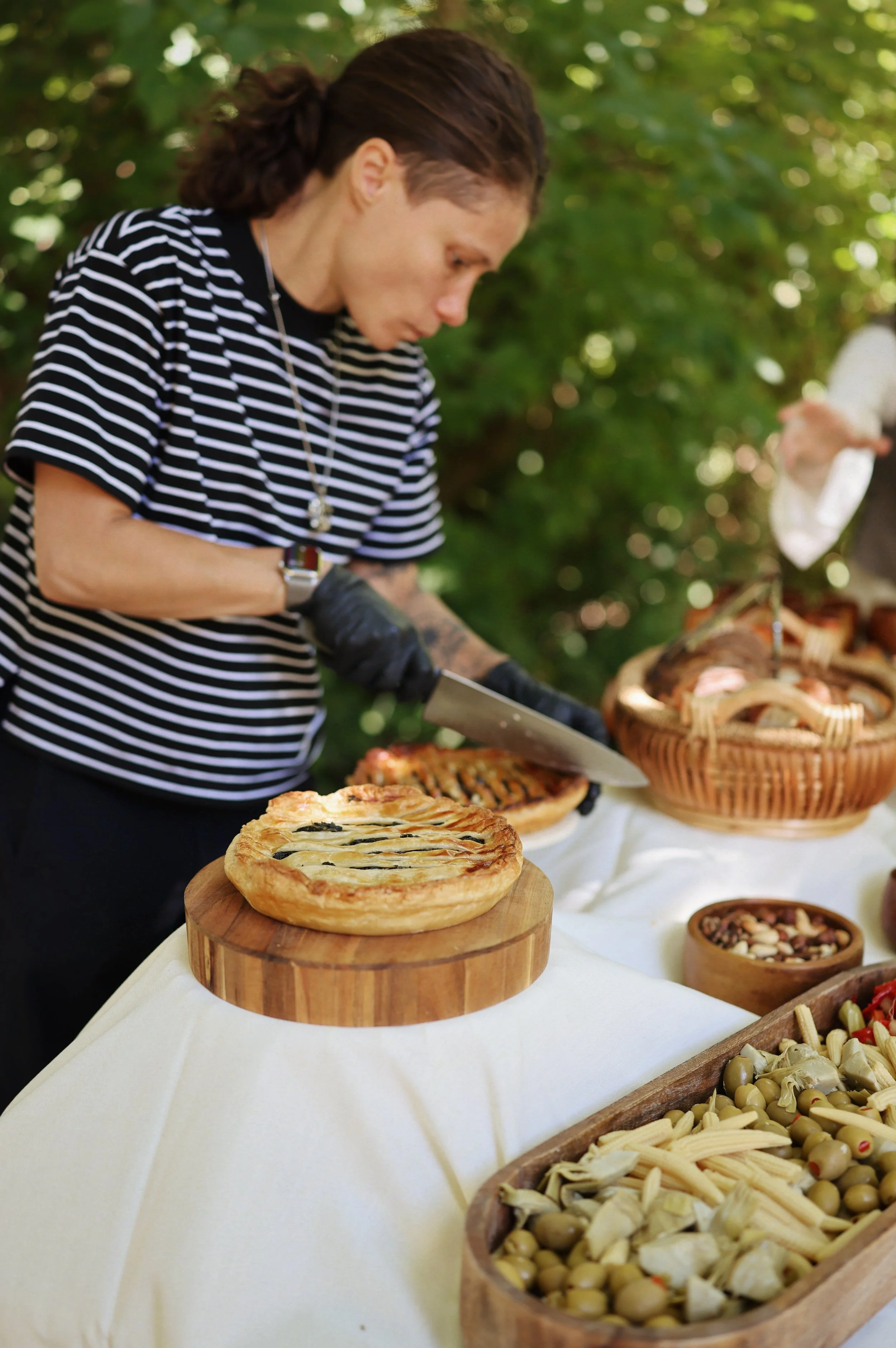
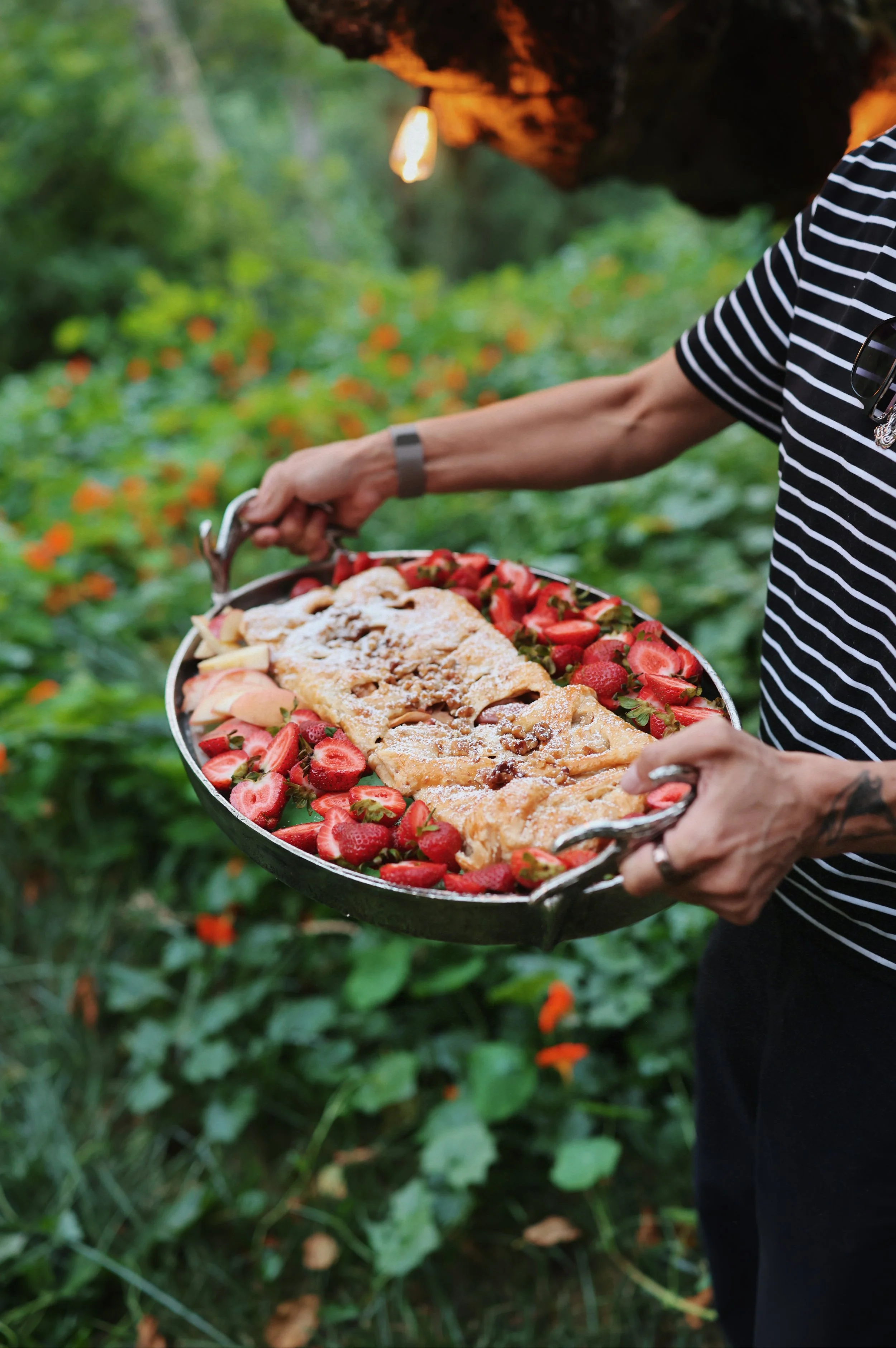
Food — I directed the menu to be abundant and informal rather than plated, choosing familiar and generous dishes that would read as a family table rather than event catering. Guests were welcomed with rustic tartines, pickled vegetables, and roasted nuts. Dinner included bread and butter, radishes, mushroom pâté, beef roast with potatoes, lion's mane steaks, and family-style sides.
Venue and Production
The concept called for a secluded redwood setting with no visible architecture. I scouted parks, farms, and private properties against a fixed set of criteria: forest access, an industrial kitchen so the meal could be served warm, straightforward parking and bathrooms, setup access, and on-site coordination capable of supporting a single lead.
Venture Retreat Center met all of them. Its existing zones made the guest journey easy to structure, and its retreat philosophy — centered on body practice and reflection — aligned directly with the workshop.
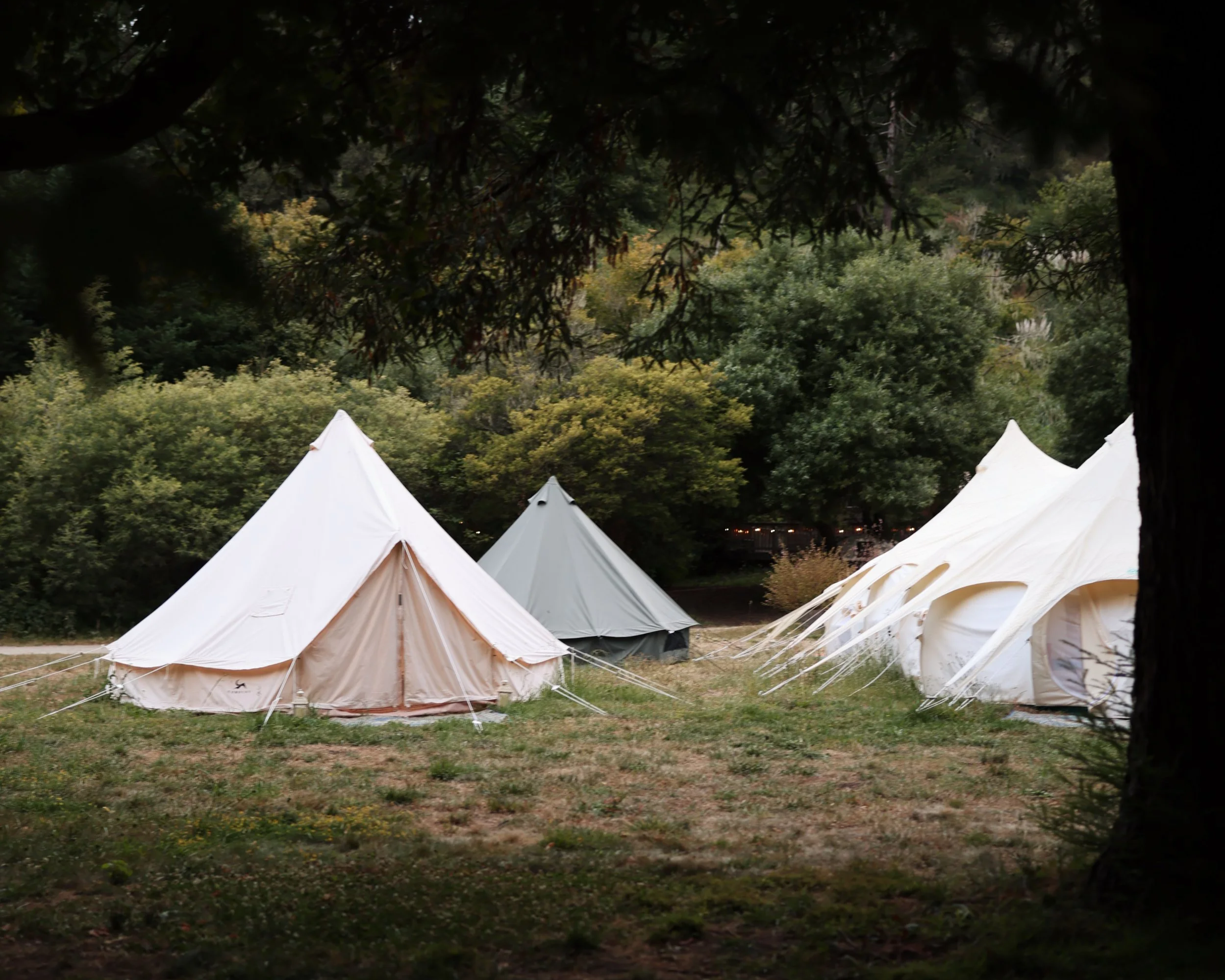
Rather than working around the property's glamping structures, I brought them into the world of the event. Their presence gave the site a sense of discovery and an atmosphere that would have been difficult to build through décor alone. I sourced the environment rather than ordering it. Vintage, thrifted, and borrowed pieces were combined with rented and purchased elements so the room would read as specific and personal, not assembled from a catalogue.
Production covered venue scouting and negotiation, contracting and insurance, the catering brief and menu structure, workshop development and scripting, materials sourcing and testing, spatial planning, table and seating design, guest communication, invitation and dress-code development, setup, breakdown, waste management, and site restoration.
When the original chef withdrew ten days before the event, I sourced a replacement and the menu was delivered as designed. High Touch Catering delivered impeccable work, both in the food and throughout the production process.
Results
The evening delivered the progression it was designed to create. Guests moved from arrival through meditation and individual making, into a collective artwork and a shared dinner. The collective work was completed and remains as a permanent object documenting thirty perspectives on the same afternoon.
Guests continued posting photographs and video for days afterward, at a gathering with no campaign, no hashtag, no branding, and no designated photo moment.
Most importantly, the structure brought together thirty adults who did not all know each other, and had them make something together before they sat down to eat.
The format is transferable beyond a private celebration. It adapts to brand events, company offsites, retreats, artist residencies, and community programming where the goal is not attendance but participation.
Credits
Creative Direction & Experience Design— Nina Gorbenko Studio
Scope: creative concept, experience architecture, workshop development and facilitation, spatial direction and styling, guest journey, menu direction, production and vendor coordination, photography and post-production.
Venue — Venture Retreat Center, Pescadero, California
Catering — High Touch Catering